
Search visibility has become one of the most critical growth levers for businesses in the digital economy. As competition intensifies across nearly every industry, appearing prominently in search results is no longer simply about driving traffic. Instead, it is about building trust, earning attention at the right moment, and sustaining relevance in an environment shaped increasingly by artificial intelligence, automation, and rapidly evolving user behavior. In this context, SEO is no longer a static checklist of tactics. It is a dynamic, data-driven discipline that requires strategic thinking, adaptability, and a deep understanding of how search systems interpret value.
As an AI marketing and analytics professional, it is clear that many organizations still struggle with visibility, not because search engines are unpredictable, but because their SEO strategies are outdated. They often focus on surface-level optimizations while overlooking the deeper signals that modern search algorithms prioritize. These signals include topical authority, user experience, intent alignment, content depth, and brand trust. Consequently, improving search visibility today requires a more holistic approach that integrates technical excellence, content intelligence, and behavioral analytics.
This article explores thirteen essential SEO tips that can significantly boost search visibility when applied thoughtfully and consistently. Rather than presenting isolated tactics, this guide explains how each principle works, why it matters, and how it solves real-world SEO challenges. Throughout the discussion, emphasis is placed on clarity, continuity, and strategic alignment, ensuring that even complex concepts remain accessible and actionable.
Understanding Search Visibility in a Modern SEO Landscape
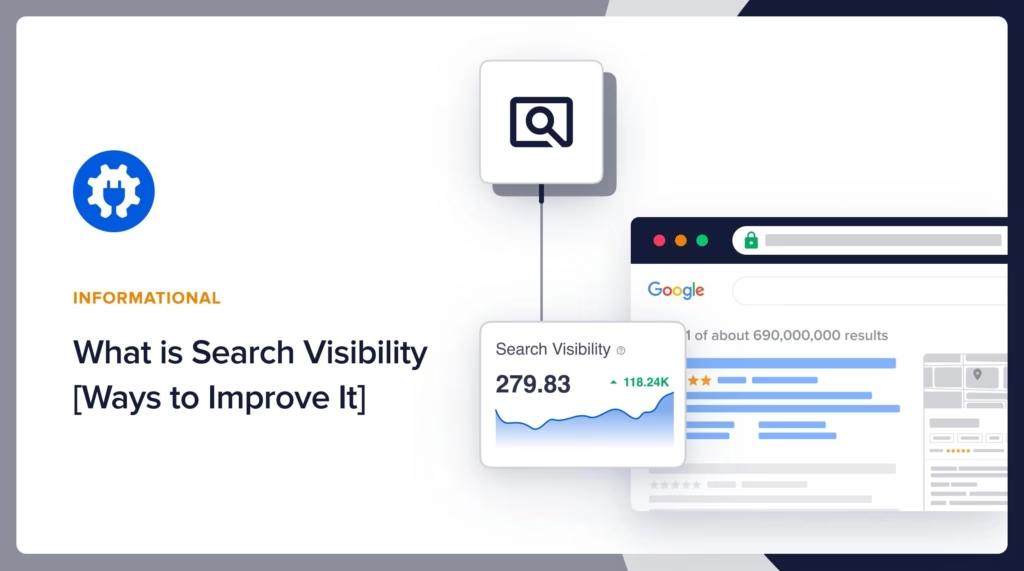
Before diving into optimization strategies, it is important to clarify what search visibility truly means. Search visibility is not limited to ranking for a handful of keywords. Instead, it reflects how often and how prominently a brand appears across relevant search queries, formats, and features. This includes organic listings, featured snippets, AI-generated answers, image results, video carousels, and local packs. In other words, visibility is about presence, consistency, and relevance across the entire search ecosystem.
Modern search engines rely heavily on AI and machine learning to interpret intent and evaluate content quality. As a result, visibility is increasingly influenced by how well content satisfies user needs rather than how precisely it matches a keyword. This shift has profound implications for SEO strategy, because it rewards depth, clarity, and usefulness while penalizing manipulation and superficial optimization.
With this broader understanding in place, the following sections explore how to systematically improve search visibility by addressing the most common SEO challenges businesses face today.
Focusing on Search Intent Rather Than Keywords Alone
One of the most impactful ways to improve search visibility is to shift focus from keywords to search intent. While keywords remain an essential component of SEO, they are merely proxies for user intent. When content is optimized around keywords without fully addressing the underlying question or problem, it often fails to perform sustainably.
Search intent can be informational, navigational, commercial, or transactional, and in many cases, it evolves as users move through the decision-making process. Therefore, content must align not only with what users are searching for, but also with why they are searching. When intent alignment is strong, engagement metrics improve, bounce rates decrease, and search engines receive positive behavioral signals that reinforce visibility.
From an analytics perspective, intent-focused optimization also enables better performance measurement. Instead of tracking isolated keyword rankings, marketers can evaluate how effectively content supports different stages of the user journey. Over time, this approach leads to more stable rankings and broader visibility across related queries.
Building Topical Authority Through Comprehensive Content

Another critical factor in boosting search visibility is building topical authority. Search engines increasingly favor websites that demonstrate deep expertise within specific subject areas rather than shallow coverage across many unrelated topics. This preference stems from AI-driven evaluation models that assess how comprehensively a site addresses a topic and how well its content interconnects.
Topical authority is built by creating content that explores a subject from multiple angles, answers related questions, and provides contextual depth. Each piece of content should reinforce a central theme and contribute to a cohesive knowledge ecosystem. As this ecosystem grows, search engines become more confident in ranking the site for a wider range of queries within that topic.
This approach also solves a common SEO problem: inconsistent rankings. When authority is established at the topic level, visibility becomes less dependent on individual pages and more resilient to algorithm updates. Consequently, businesses experience more predictable and scalable organic growth.
Optimizing Content for Readability and Engagement

Search visibility is influenced not only by what the content says, but also by how it is presented. Readability plays a crucial role in user engagement, which in turn affects SEO performance. Content that is difficult to read, poorly structured, or overly technical tends to discourage users, leading to shorter dwell times and weaker behavioral signals.
To address this issue, content should be written in a clear, conversational tone that balances expertise with accessibility. Logical flow, smooth transitions, and well-developed explanations help readers absorb information more effectively. When users stay longer, scroll further, and interact more deeply with content, search engines interpret these behaviors as indicators of quality and relevance.
Moreover, readability enhances inclusivity by making content accessible to a broader audience. This expanded reach increases the likelihood of backlinks, shares, and mentions, all of which contribute to improved search visibility.
Improving Technical SEO to Support Content Performance

While content quality is paramount, it cannot achieve maximum visibility without a strong technical foundation. Technical SEO ensures that search engines can crawl, index, and interpret content efficiently. Issues such as slow page speed, poor mobile performance, broken links, and improper indexing can significantly hinder visibility regardless of content quality.
In today’s AI-driven search environment, technical performance is closely tied to user experience. Search engines prioritize fast, secure, and mobile-friendly websites because these attributes correlate with user satisfaction. When technical barriers are removed, content is more likely to be discovered, ranked, and surfaced across various search features.
From an analytics standpoint, technical SEO improvements often yield measurable gains in crawl efficiency, indexation rates, and organic impressions. These metrics provide valuable feedback on how effectively a site supports search visibility at scale.
Creating Content That Answers Real Questions Clearly
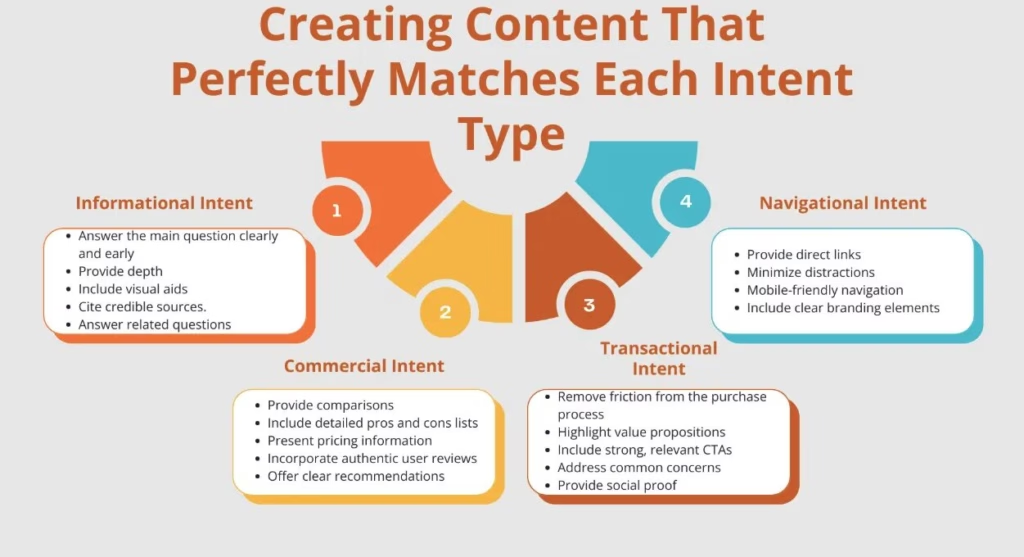
One of the most effective ways to increase search visibility is to directly answer the questions users are asking. AI-powered search features, such as featured snippets and generative responses, rely heavily on content that provides clear, concise, and accurate explanations. When content is structured around answering real questions, it becomes more likely to be selected and highlighted.
This approach requires understanding not only the primary question, but also the context and follow-up questions that naturally arise. By addressing these related inquiries within the same content, marketers can capture additional visibility and demonstrate expertise.
Furthermore, question-focused content aligns well with voice search and conversational AI interfaces, which are becoming increasingly popular. As a result, this strategy supports visibility across emerging search modalities as well as traditional SERPs.
Leveraging Data and Analytics to Guide Optimization

Effective SEO is impossible without data-driven decision-making. Analytics provide insight into what is working, what is underperforming, and where opportunities exist. However, many organizations misuse analytics by focusing solely on vanity metrics rather than actionable insights.
To truly boost search visibility, analytics should be used to understand user behavior, content performance, and intent fulfillment. Metrics such as engagement time, scroll depth, return visits, and conversion paths reveal how users interact with content and where improvements are needed.
Advanced analytics also enable predictive optimization. By identifying trends in search behavior and content consumption, marketers can anticipate future demand and create content proactively. This forward-looking approach is particularly valuable in competitive markets where early visibility can yield lasting advantages.
Strengthening Internal Linking for Context and Discovery
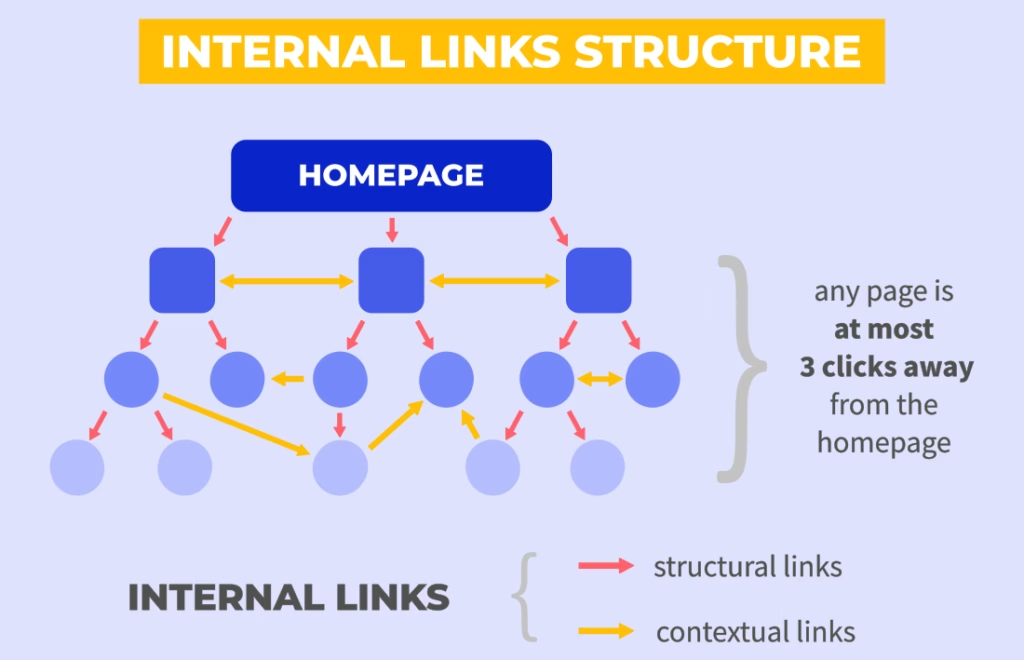
Internal linking is often overlooked, yet it plays a vital role in improving search visibility. Internal links help search engines understand the structure of a website, the relationships between pages, and the relative importance of content. When implemented strategically, internal linking distributes authority and enhances discoverability.
From a user perspective, internal links guide exploration and encourage deeper engagement. When readers can easily navigate related content, they are more likely to stay on the site longer and consume additional information. These behaviors send positive signals to search engines and reinforce visibility.
Additionally, internal linking supports topical authority by connecting related content within a thematic cluster. Over time, this interconnected structure strengthens the site’s relevance for core topics and expands its ranking potential.
Optimizing for Emerging Search Features and Formats

Search results today extend far beyond traditional organic listings. Featured snippets, knowledge panels, image packs, video results, and AI-generated summaries all contribute to overall visibility. Therefore, SEO strategies must account for these features rather than focusing exclusively on blue-link rankings.
Optimizing for diverse formats requires understanding how content is interpreted and displayed across different result types. Clear headings, descriptive language, and well-organized explanations increase the likelihood of content being featured. Visual assets such as images and videos also play a growing role in capturing attention and driving engagement.
By embracing these formats, brands can occupy more real estate on search results pages, even if traditional rankings fluctuate. This multi-format visibility is especially valuable in competitive niches where organic positions are difficult to secure.
Ensuring Consistency and Accuracy Across the Web
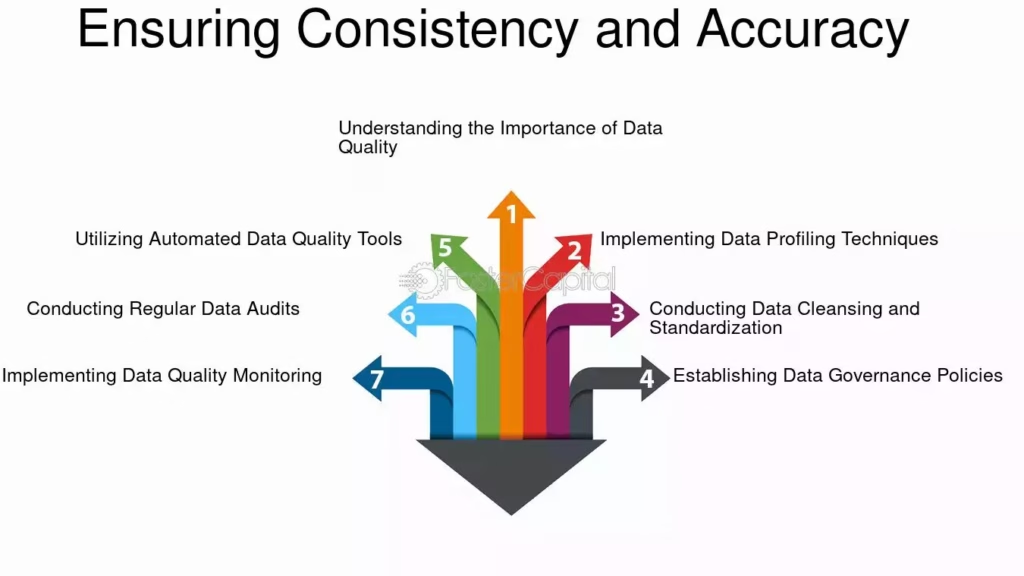
Search visibility is influenced by how consistently a brand is represented across the digital ecosystem. Inconsistent information, outdated content, or conflicting messages can confuse users and reduce algorithmic trust. Therefore, maintaining accuracy and consistency is essential.
This includes ensuring that brand details, messaging, and expertise signals align across websites, social platforms, directories, and third-party references. When search engines encounter consistent information, they are more confident in surfacing the brand as a reliable source.
From a problem-solving standpoint, consistency also improves user trust and conversion rates. When users encounter the same message and value proposition across touchpoints, they feel more confident in their decision-making process.
Earning Trust Through Quality and Transparency
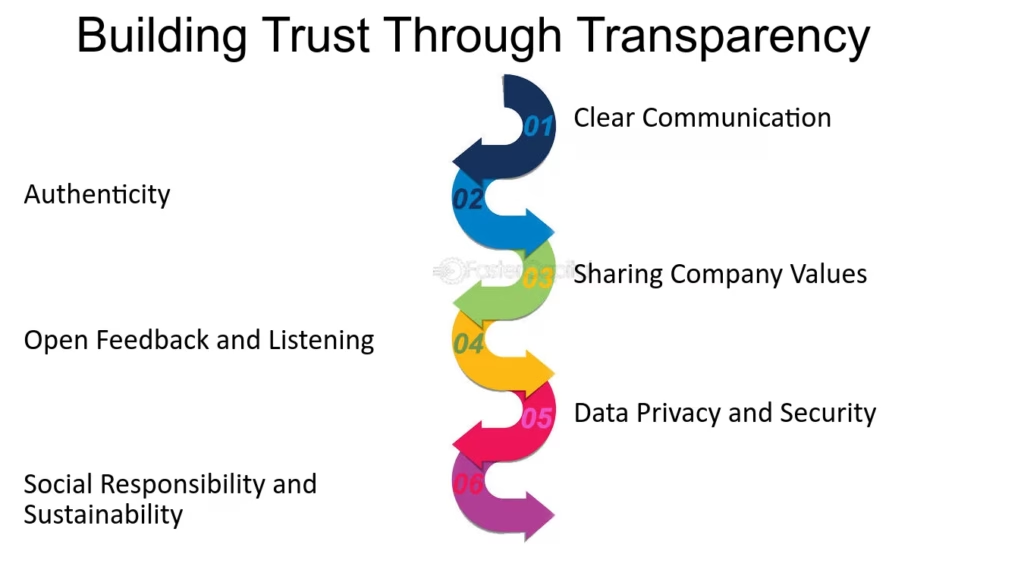
Trust has become a central ranking signal in modern SEO. Search engines aim to deliver reliable information, especially in sensitive or high-impact topics. As a result, content that demonstrates expertise, transparency, and credibility is more likely to achieve strong visibility.
Trust can be earned by providing accurate information, citing reliable sources, and avoiding exaggerated claims. Clear explanations of methodology, intent, and limitations further enhance credibility. Over time, these practices build a reputation that benefits both users and search algorithms.
In addition, trust influences engagement and sharing behavior. Users are more likely to recommend and link to content they perceive as authoritative and honest, which further amplifies search visibility.
Adapting SEO Strategy to AI-Driven Search Evolution

As AI continues to reshape search, SEO strategies must evolve accordingly. AI-driven systems prioritize context, meaning, and usefulness over rigid optimization patterns. This shift rewards content that is genuinely helpful and penalizes tactics designed solely to manipulate rankings.
To adapt effectively, marketers must embrace continuous learning and experimentation. Monitoring changes in search features, analyzing AI-generated responses, and adjusting content accordingly are essential practices. By staying informed and flexible, brands can maintain visibility even as search paradigms shift.
Importantly, AI-driven search also democratizes visibility by emphasizing quality over scale. Smaller brands with strong expertise can compete effectively by delivering exceptional value and clarity.
Measuring SEO Success Beyond Rankings

Finally, boosting search visibility requires redefining how success is measured. Rankings remain useful indicators, but they do not capture the full impact of SEO in a complex search environment. Visibility should be assessed through a combination of impressions, engagement, brand exposure, and conversion influence.
By adopting a holistic measurement framework, marketers can better understand how SEO contributes to broader business goals. This perspective enables more informed investment decisions and more effective optimization over time.
Related Post:
When SEO performance is evaluated in context, it becomes easier to identify strengths, address weaknesses, and sustain growth.
Turning SEO Into a Long-Term Visibility Engine
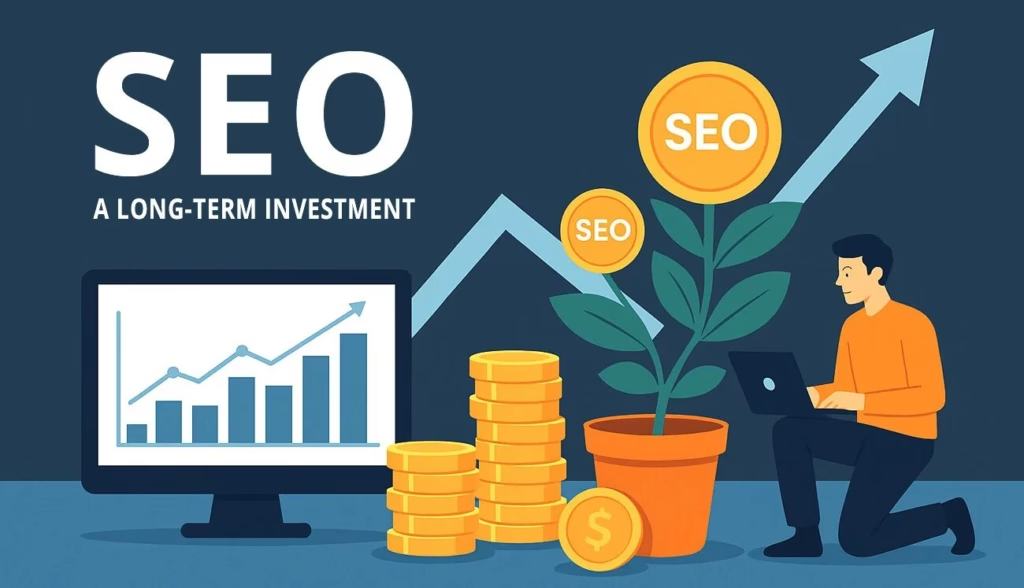
Boosting search visibility is not about implementing isolated tactics or chasing short-term gains. It is about building a strategic, user-centered, and data-driven SEO framework that evolves with technology and behavior. By focusing on intent, authority, readability, technical excellence, analytics, and trust, businesses can create a durable foundation for organic growth.
The thirteen principles explored in this article are not quick fixes, but enduring strategies that align with how modern search systems operate. When applied consistently, they transform SEO from a reactive task into a proactive growth engine. In an era defined by AI and information abundance, the brands that succeed will be those that prioritize clarity, value, and relevance at every stage of the search journey.
