
Keyword research is no longer a preliminary SEO task that you complete once and forget. Instead, in today’s AI-driven search ecosystem, it is a continuous intelligence process that informs content strategy, paid acquisition, product positioning, and even brand messaging. As search engines evolve through machine learning models, semantic indexing, and intent clustering, the way we identify and evaluate keywords must evolve as well.
In 2026, search behavior is more nuanced than ever. Users ask conversational questions, use voice inputs, interact with AI-generated summaries, and expect precise answers instantly. Consequently, keyword research has shifted from simple volume analysis to multidimensional demand modeling. Therefore, choosing the right keyword research tools is not just about convenience. It is about competitive advantage.
In this comprehensive guide, we will explore eight powerful keyword research tools, both free and paid, that can significantly improve your SEO and content performance. More importantly, we will examine how each tool solves specific marketing challenges, how it fits into a modern AI-powered workflow, and when you should prioritize one over another.
Why Keyword Research Still Matters in an AI-Driven Search Landscape

Before diving into specific tools, it is important to address a common misconception. Many marketers assume that because search engines now understand context and semantics, traditional keyword research has become less important. However, the opposite is true.
Although search engines like Google have advanced natural language processing capabilities, they still rely on structured signals to determine relevance. Furthermore, user intent remains measurable through search queries. While the phrasing may become more conversational, the underlying demand patterns still exist.
Moreover, AI-generated search summaries and featured snippets amplify competition. If you are not targeting high-intent queries strategically, your content may never surface in these premium placements. Therefore, keyword research is not about stuffing exact-match phrases anymore. Instead, it is about understanding topical authority, search intent clusters, and competitive gaps.
With that context in mind, let us explore the tools that can help you execute this process effectively.
Google Keyword Planner: The Foundational Free Tool for Demand Validation
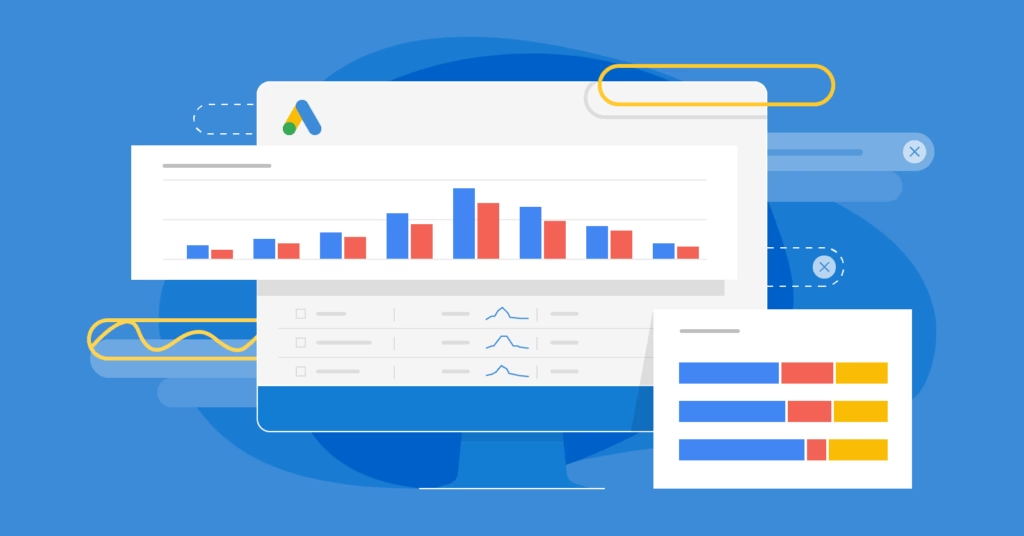
To begin with, no keyword research discussion would be complete without mentioning Google Keyword Planner. Although originally designed for advertisers using Google Ads, it remains one of the most reliable sources of raw search volume data.
The primary advantage of Google Keyword Planner lies in its direct connection to Google’s advertising ecosystem. Because it pulls data from paid search campaigns, its volume estimates provide a grounded view of demand. Therefore, if your goal is to validate whether a topic has measurable search interest, this tool offers a solid starting point.
However, there are limitations. Volume ranges can be broad unless you actively run ads. Additionally, competition metrics reflect paid competition rather than organic SEO difficulty. As a result, relying solely on this tool for organic strategy can be misleading.
Nevertheless, when used correctly, Google Keyword Planner excels at identifying commercial intent queries and validating demand for new service pages or product launches. In other words, it is particularly valuable during early-stage validation and PPC alignment.
Google Search Console: The Most Underutilized Goldmine
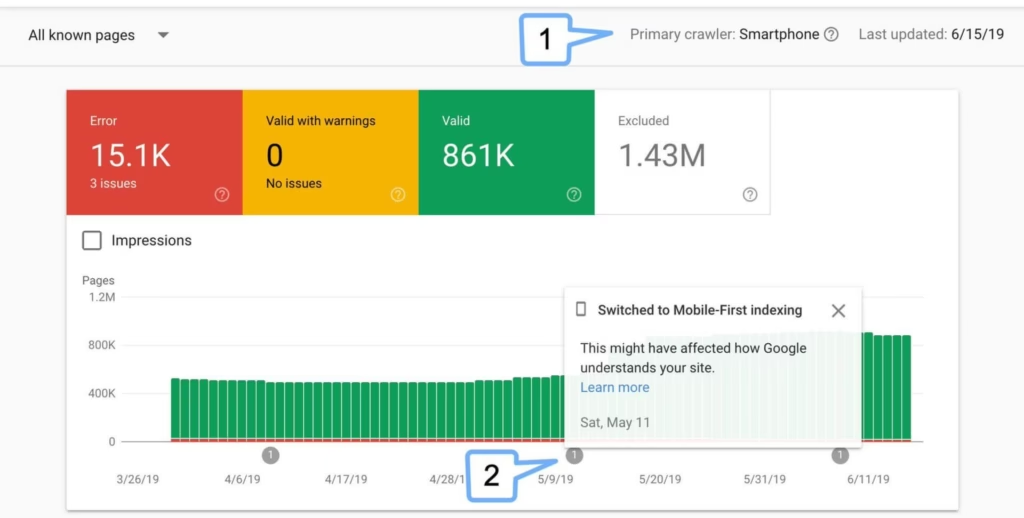
While many marketers focus on discovering new keywords, they often overlook the data already available to them. Google Search Console provides real query data showing exactly what users are searching to find your website.
Unlike predictive tools, Search Console reflects actual impressions and clicks. Therefore, it reveals opportunities where your content is already ranking but underperforming. For instance, if a page ranks on the second page for a high-intent query, optimizing that content could yield significant gains.
Furthermore, impression data exposes emerging keyword trends before third-party tools detect them. Because it reflects live performance, it allows you to identify new semantic variations and long-tail expansions.
Consequently, Search Console is not just a reporting tool. It is an optimization engine. When integrated into a monthly content audit workflow, it becomes one of the most powerful free keyword research tools available.
Ahrefs: Advanced Competitive Intelligence and Keyword Depth

When moving beyond foundational tools, Ahrefs stands out as one of the most comprehensive paid SEO platforms. Its keyword database spans multiple countries and includes detailed metrics such as keyword difficulty, clicks, return rate, and parent topic clustering.
What makes Ahrefs particularly powerful is its competitive analysis capability. Instead of guessing which keywords to target, you can analyze competitor domains and identify exactly which queries drive their traffic. Therefore, it transforms keyword research from speculative brainstorming into strategic reverse engineering.
Additionally, Ahrefs provides click metrics that account for zero-click searches. This is crucial in 2026, where many queries are answered directly in search results. By evaluating actual click potential rather than raw volume alone, you can prioritize keywords that drive traffic instead of impressions only.
Although Ahrefs requires investment, it is especially valuable for agencies, large content teams, and businesses operating in competitive industries.
SEMrush: Integrated Keyword Strategy and Content Planning
Another major player in the SEO ecosystem is Semrush. While similar to Ahrefs in many respects, Semrush differentiates itself through its integrated content marketing toolkit.
Beyond keyword volume and difficulty metrics, Semrush offers topic clustering tools, keyword gap analysis, and content optimization recommendations. As a result, it supports not just research but also execution.
For example, its keyword gap feature allows you to compare your domain against competitors and uncover missed opportunities. Meanwhile, its topic research module helps generate content ideas aligned with search demand.
Furthermore, Semrush integrates with PPC data, making it easier to align organic and paid strategies. Therefore, if your organization prioritizes full-funnel marketing integration, this platform can centralize your keyword strategy effectively.
Ubersuggest: Affordable Insights for Growing Businesses
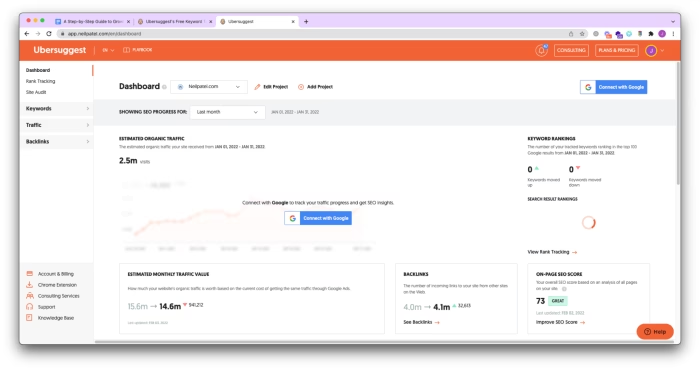
For marketers who need actionable insights without enterprise-level pricing, Ubersuggest offers a practical alternative. Originally developed by Neil Patel, Ubersuggest has evolved into a user-friendly SEO suite.
Its interface simplifies keyword discovery by providing search volume, SEO difficulty, paid difficulty, and content ideas in an accessible format. Therefore, it is particularly suitable for small businesses, freelancers, and startups.
Although its database may not be as expansive as Ahrefs or Semrush, it compensates with affordability and ease of use. Moreover, its content suggestions feature can spark blog ideas aligned with actual search queries.
In essence, Ubersuggest bridges the gap between free tools and premium platforms.
AnswerThePublic: Intent Discovery Through Question Mining

Modern search behavior is increasingly question-based. As users interact with voice assistants and AI chat interfaces, they phrase queries conversationally. Consequently, tools that capture question-based searches have become invaluable.
AnswerThePublic specializes in visualizing question variations and prepositional phrases related to a seed keyword. Instead of focusing purely on volume, it surfaces how people frame their problems.
This is particularly useful for content marketers building educational blogs, FAQ sections, or video scripts. By addressing real questions, you align content with informational intent more precisely.
However, because it does not emphasize competitive metrics heavily, it works best when paired with a tool that provides difficulty and volume data.
KeywordTool.io: Multi-Platform Keyword Expansion
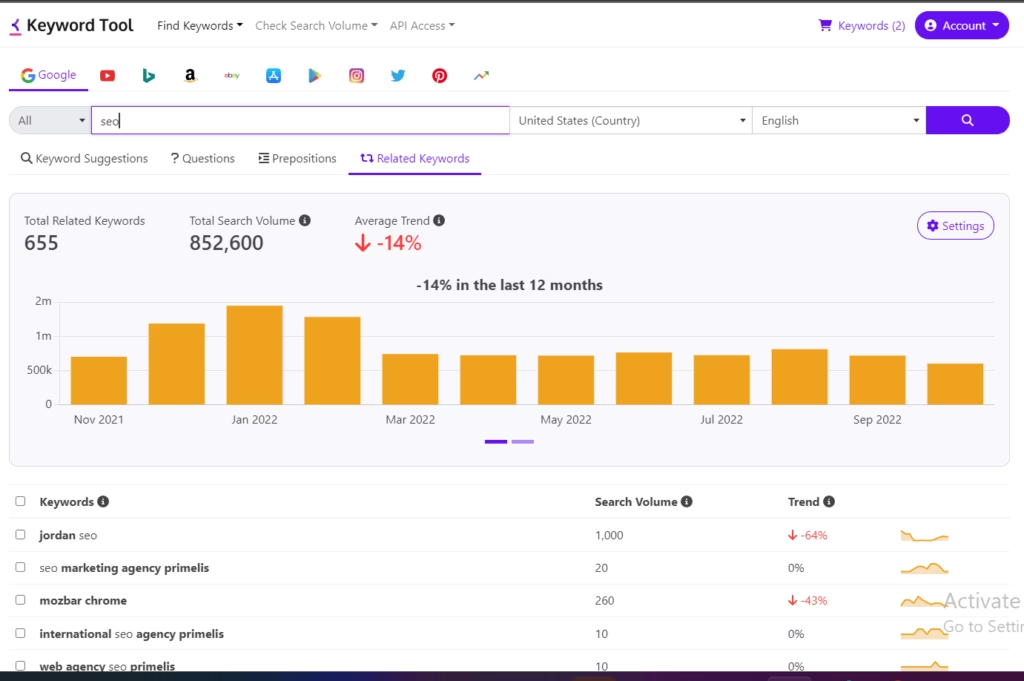
Search does not happen only on Google. Users search on YouTube, Amazon, TikTok, and app stores. Therefore, cross-platform keyword research has become increasingly important.
Keyword Tool pulls autocomplete suggestions from multiple platforms, including Google, YouTube, and Amazon. As a result, it expands your research beyond traditional web search.
This is particularly valuable for e-commerce brands and video creators. For example, understanding Amazon search suggestions can inform product listing optimization, while YouTube suggestions can guide video topic selection.
Although detailed metrics require a paid plan, even the free version offers substantial idea generation capabilities.
Moz Keyword Explorer: Balanced Metrics with User-Friendly Scoring
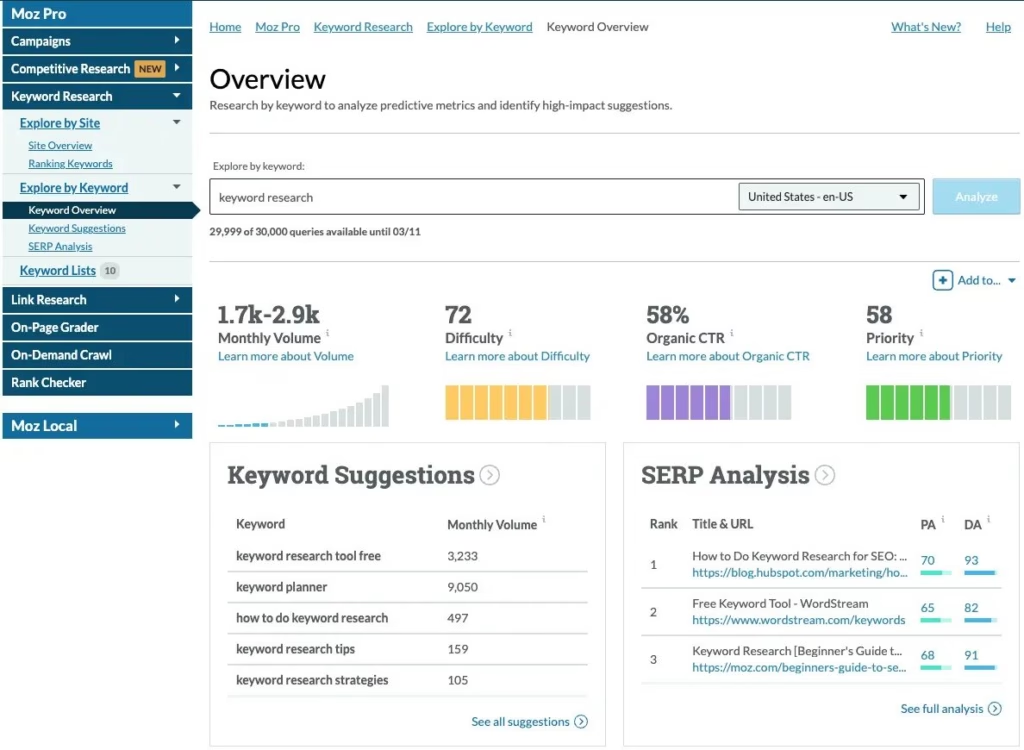
Finally, Moz Keyword Explorer offers a balanced approach to keyword evaluation. It combines search volume, difficulty, organic CTR, and priority scoring into a unified metric framework.
One of its strengths lies in clarity. Rather than overwhelming users with excessive data, it provides actionable insights in a digestible format. Consequently, it is well suited for marketers who value strategic clarity over granular technical detail.
Additionally, Moz emphasizes SERP analysis, helping you understand the types of content currently ranking. Therefore, it supports intent matching and content format decisions effectively.
How to Choose the Right Tool for Your Strategy
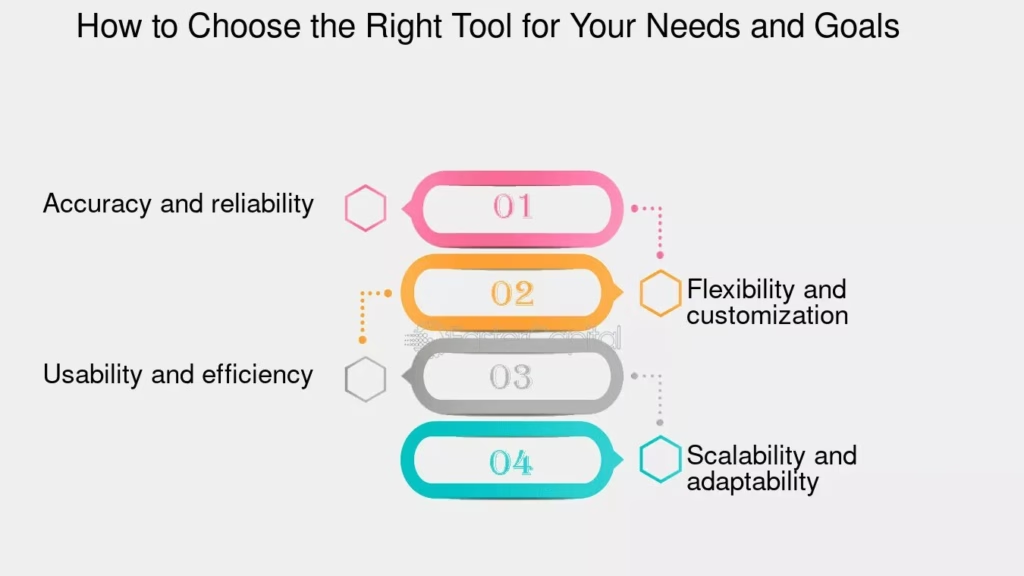
At this point, you may wonder which tool is best. The answer depends on your strategic objectives, budget, and workflow complexity.
If you are validating demand and aligning PPC campaigns, Google Keyword Planner is sufficient. If you are optimizing existing performance, Google Search Console should be your starting point. However, if you are competing aggressively in a saturated market, investing in Ahrefs or Semrush provides deeper competitive intelligence.
Meanwhile, smaller businesses may find Ubersuggest or Moz more practical. And for content ideation and intent discovery, AnswerThePublic and KeywordTool.io offer unique advantages.
In reality, advanced marketers often combine tools. By cross-validating data sources, you minimize blind spots and improve decision accuracy.
Integrating Keyword Tools into an AI-Driven Workflow

In 2026, keyword research does not end with data extraction. Instead, it feeds into AI-powered content modeling systems. For example, once high-intent clusters are identified, AI writing assistants can generate outlines aligned with semantic coverage requirements. Similarly, predictive analytics tools can estimate potential traffic gains.
However, automation should enhance strategic thinking rather than replace it. Tools provide data, but interpretation drives results. Therefore, human oversight remains essential.
By integrating keyword research tools into a structured analytics framework, you transition from reactive content production to proactive search demand capture.
Keyword research remains one of the highest-leverage activities in digital marketing. Although search engines have become more intelligent, they still respond to structured signals and intent alignment. Therefore, investing time and resources into proper keyword research tools is not optional. It is foundational.
Related Articles: 13 SEO Tips to Boost Your Search Visibility
Whether you begin with free platforms like Google Keyword Planner and Search Console or invest in premium solutions like Ahrefs and Semrush, the key lies in strategic application. Tools alone do not create traffic. Insightful execution does.
Ultimately, the most effective marketers in 2026 will not be those who chase random keywords. Instead, they will be those who build data-driven keyword ecosystems that align content, conversion pathways, and competitive positioning into one coherent growth engine.
