
In 2026, a website is no longer simply a digital brochure or an online presence placeholder. Instead, it has become the central infrastructure that supports visibility, conversions, analytics intelligence, brand authority, and customer experience across the entire digital journey. Consequently, when a website underperforms, the impact extends beyond traffic metrics. It affects lead generation, revenue growth, search rankings, brand trust, and even operational efficiency. For this reason, conducting a structured website audit is no longer optional. Rather, it is a strategic requirement for organizations that want to compete effectively in a search environment increasingly shaped by artificial intelligence, predictive analytics, and user intent modeling.
However, a website audit in 2026 is very different from what it was just a few years ago. Previously, audits focused primarily on technical SEO errors, keyword placement, and backlink counts. Today, the scope has expanded significantly. Modern audits evaluate performance architecture, AI search readiness, content intent alignment, accessibility compliance, behavioral analytics signals, structured data quality, conversion pathways, and platform interoperability. Therefore, understanding how to perform a website audit now requires a broader analytical mindset and a more integrated methodology.
This comprehensive guide explains how to conduct a modern website audit step by step while also introducing a practical free tracker framework that you can adapt to your own workflow. More importantly, it shows how to interpret audit findings in a way that supports measurable growth rather than simply generating reports that remain unused.
Understanding What a Website Audit Means in 2026

To begin with, it is essential to clarify what a website audit actually represents in today’s environment. A website audit is not merely a diagnostic checklist. Instead, it is a structured evaluation process that measures how effectively a website supports business objectives across visibility, usability, credibility, and performance.
In earlier SEO eras, audits often emphasized isolated technical errors such as broken links or missing metadata. While these issues still matter, they are no longer sufficient indicators of success. Search engines now evaluate websites using machine learning systems that interpret context, experience quality, authority signals, and engagement patterns. Consequently, a modern audit must examine how all these dimensions interact.
At the same time, users expect frictionless navigation, fast load times, trustworthy information, and mobile-first responsiveness. Therefore, a successful website audit evaluates both algorithmic compatibility and human experience simultaneously. When both perspectives align, performance improvements become sustainable rather than temporary.
Why Website Audits Are More Important Than Ever

The importance of website audits has increased dramatically because digital ecosystems have become more interconnected. A single performance issue can now influence multiple marketing channels simultaneously. For example, slow page speed can reduce search rankings, increase bounce rates, lower ad quality scores, and decrease conversion rates all at once.
Moreover, artificial intelligence has changed how search engines interpret website value. Instead of analyzing keywords alone, search systems evaluate topical authority, structured data clarity, semantic relationships, and user satisfaction indicators. As a result, even small structural weaknesses can prevent strong content from achieving visibility.
Additionally, privacy regulations and evolving analytics frameworks require websites to manage data responsibly while still capturing meaningful insights. Therefore, auditing tracking configurations has become just as important as auditing page titles or heading structures.
Because of these shifts, a website audit now functions as both a diagnostic and a forecasting tool. It identifies present issues while also revealing future opportunities.
Starting with Clear Audit Objectives
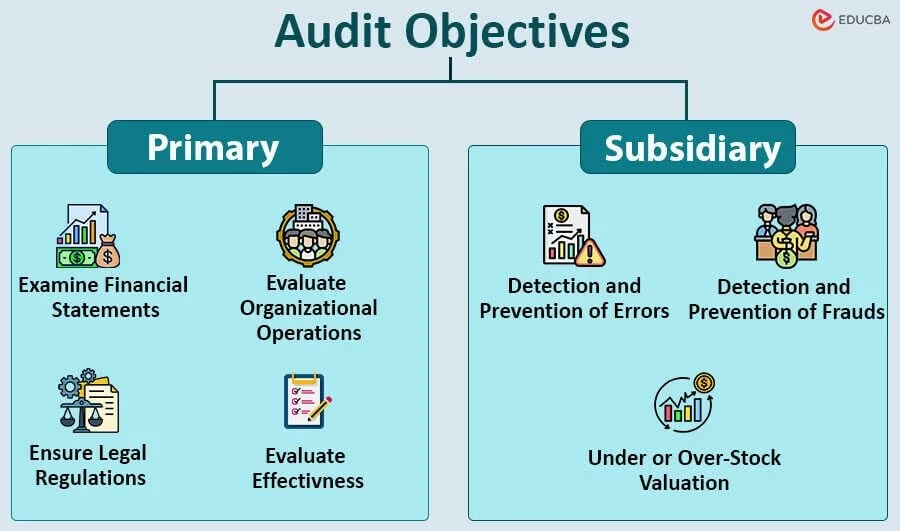
Before beginning any technical inspection, it is necessary to define what the audit is intended to accomplish. Without clear objectives, the process quickly becomes overwhelming because modern websites contain hundreds or even thousands of measurable elements.
For example, some audits prioritize improving organic visibility. Others focus on increasing conversion performance. Still others support migration readiness, accessibility compliance, or content restructuring initiatives. By identifying the primary purpose of the audit early, the evaluation process becomes more efficient and more actionable.
Furthermore, aligning audit objectives with business KPIs ensures that recommendations support measurable outcomes rather than abstract improvements. When audit insights connect directly to growth targets, implementation becomes easier to justify internally.
Evaluating Technical Infrastructure First

Once objectives are defined, the next step involves assessing technical infrastructure. Technical stability forms the foundation upon which all other improvements depend. If search engines cannot crawl or index pages effectively, even the best content cannot perform.
In 2026, technical infrastructure audits extend beyond traditional indexing checks. They now include evaluating crawl budget efficiency, structured data implementation quality, JavaScript rendering compatibility, and mobile performance reliability. Additionally, server response times influence both user experience and ranking potential. Therefore, measuring performance across different device environments is essential.
Equally important is ensuring that secure connections function correctly across the entire website. Security signals influence both search visibility and user trust. When visitors encounter warnings or inconsistent certificate behavior, engagement declines quickly. Consequently, auditing encryption coverage remains a critical step.
Because modern websites rely heavily on integrated platforms, APIs, and content delivery networks, infrastructure audits must also examine interoperability reliability. Even small integration failures can disrupt analytics tracking or personalization features.
Reviewing Content Quality and Intent Alignment

After confirming technical stability, attention should shift toward content quality and intent alignment. Search engines increasingly evaluate whether content solves user problems effectively rather than simply matching keywords. Therefore, content audits must examine usefulness, clarity, and relevance.
In 2026, intent alignment has become particularly important because search systems now generate AI-powered summaries directly in results pages. Consequently, only content that provides clear, structured answers earns visibility advantages.
Evaluating content depth involves examining whether articles address primary questions completely while also covering related subtopics logically. When content demonstrates topical completeness, search engines interpret it as authoritative. At the same time, readers remain engaged longer because they do not need to return to search results for additional answers.
Equally important is ensuring that outdated information is refreshed regularly. As industries evolve quickly, stale content can reduce credibility even if its structure remains strong. Therefore, a content freshness review should always be included within the audit process.
Assessing User Experience Signals

User experience has become one of the strongest indicators of website effectiveness. Modern search algorithms interpret engagement metrics such as interaction depth, navigation flow clarity, and page responsiveness as signals of satisfaction.
Consequently, auditing user experience involves examining layout consistency, mobile usability, readability structure, and navigation efficiency. When users can locate information quickly, they remain on the site longer and interact more deeply with content.
Accessibility also plays a major role in modern user experience evaluation. Websites that support screen readers, keyboard navigation, and adaptable font scaling reach broader audiences while also complying with international standards. Because accessibility improvements benefit both usability and SEO performance, they represent high-impact optimization opportunities.
Analyzing Internal Linking Architecture
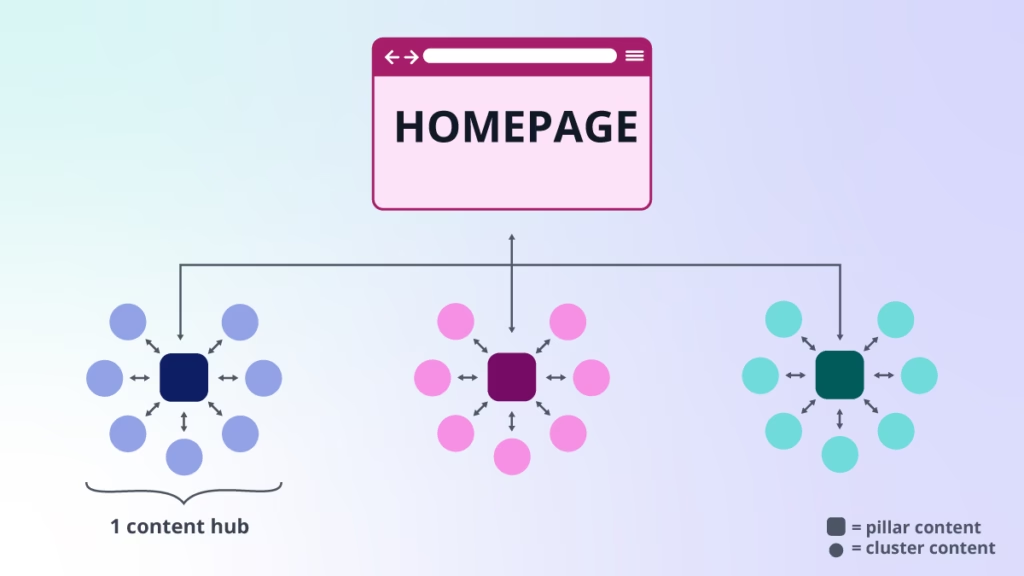
Internal linking functions as the structural backbone of a website’s information hierarchy. Search engines rely on internal links to understand content relationships and prioritize indexing order. Therefore, evaluating link architecture reveals whether authority signals flow effectively across pages.
A strong internal linking structure connects related topics logically while guiding users toward deeper engagement pathways. When pillar pages connect to supporting resources strategically, topical authority strengthens naturally.
Moreover, internal linking audits identify orphaned pages that receive little visibility. By reconnecting these pages to relevant content clusters, their performance potential increases significantly.
Evaluating External Authority Signals

Although on-site optimization remains essential, external authority signals still influence search visibility. Backlink quality, brand mentions, and citation consistency contribute to how search engines interpret trustworthiness.
However, backlink auditing in 2026 emphasizes relevance and credibility rather than quantity alone. Links from contextually related sources provide stronger authority signals than large numbers of unrelated references.
Additionally, brand presence across directories and knowledge panels supports entity recognition within AI-driven search systems. Therefore, verifying consistency across external references strengthens both credibility and discoverability.
Reviewing Analytics and Tracking Configuration

Analytics configuration represents one of the most overlooked aspects of website auditing. Many organizations collect large amounts of data without verifying accuracy. As a result, strategic decisions may rely on incomplete insights.
Auditing analytics involves confirming that tracking codes load correctly, events capture meaningful actions, and attribution pathways reflect actual user journeys. Furthermore, privacy compliance frameworks must align with regional regulations to ensure ethical data usage.
When analytics tracking functions properly, audit recommendations become measurable rather than speculative. Consequently, implementation priorities become easier to define.
Introducing a Free Website Audit Tracker Framework

A structured tracker transforms an audit from a one-time activity into an ongoing optimization system. Instead of documenting issues informally, a tracker organizes observations into categories such as technical performance, content alignment, user experience quality, authority signals, and analytics configuration status.
Within each category, observations can be recorded alongside severity assessments, recommended actions, responsible team members, and implementation timelines. Over time, this structure allows teams to monitor progress consistently.
Because many organizations operate across multiple stakeholders, a shared tracker also improves communication clarity. Developers understand technical priorities, marketers understand content improvements, and leadership understands expected impact.
Most importantly, a tracker converts audit insights into execution roadmaps rather than static reports.
Turning Audit Findings into Actionable Strategy

Conducting an audit is only valuable if findings translate into implementation. Therefore, prioritization plays a critical role in determining success. High-impact issues that influence visibility and conversions should be addressed first, followed by structural refinements that support long-term scalability.
In addition, implementation timelines should reflect resource availability realistically. Attempting to resolve every issue simultaneously often leads to delays. Instead, phased optimization ensures steady progress while maintaining operational stability.
As improvements are deployed, tracking performance changes confirms whether recommendations deliver expected results. This feedback loop strengthens future audit accuracy.
Preparing for AI Search Visibility Through Auditing

One of the most significant developments influencing website audits in 2026 is the rise of AI-generated search experiences. These systems rely heavily on structured clarity, entity recognition, and semantic relationships.
Therefore, audits should evaluate whether content communicates expertise clearly enough for machine interpretation. Structured headings, contextual linking, and schema markup support this objective.
When websites demonstrate strong semantic clarity, they become more likely to appear in AI-assisted discovery environments.
Maintaining Continuous Audit Cycles Instead of One-Time Reviews

Finally, it is important to recognize that website audits should not occur only once per year. Because algorithms evolve continuously, regular evaluation ensures sustained performance.
Quarterly mini-audits combined with annual comprehensive audits provide a balanced approach. This rhythm allows teams to identify emerging issues early while maintaining long-term strategy alignment.
Over time, continuous auditing transforms optimization from reactive troubleshooting into proactive performance engineering.
Building a Future-Ready Website Through Strategic Auditing

In today’s digital landscape, a website audit represents far more than a maintenance task. Instead, it functions as a strategic intelligence process that reveals how effectively a website supports growth objectives across visibility, engagement, authority, and conversions.
By evaluating infrastructure reliability, content alignment, user experience quality, authority signals, analytics accuracy, and AI readiness together, organizations gain a complete understanding of performance strengths and weaknesses. When these insights are organized through a structured tracker and implemented systematically, they produce measurable improvements across multiple channels simultaneously.
Ultimately, the organizations that succeed in 2026 will not be those that audit occasionally. Rather, they will be those that embed auditing into their continuous optimization culture. Through this disciplined approach, websites evolve from static platforms into adaptive growth engines capable of thriving in an increasingly intelligent search ecosystem.
