
The search landscape is undergoing one of the most significant transformations in its history. For more than two decades, businesses, marketers, and SEO professionals focused primarily on optimizing websites for traditional search engines that ranked webpages and displayed them in a list of results. However, the rise of generative artificial intelligence has fundamentally changed how users discover information online. Today, people increasingly receive direct answers generated by AI systems rather than simply clicking through a collection of links.
Recognizing this shift, Google recently published guidance to help website owners, marketers, publishers, and businesses understand how to optimize their content for generative AI search experiences. This guidance arrives at a critical moment because search is no longer just about rankings. Instead, it is increasingly about visibility within AI-generated answers, AI Overviews, conversational search interfaces, and intelligent search assistants.

For businesses that rely on organic traffic, this evolution raises important questions. How do generative search systems choose which sources to trust? What types of content are most likely to be featured in AI-generated responses? How can organizations maintain visibility when users receive answers without necessarily clicking on websites? Most importantly, what practical steps should marketers take to adapt?
The good news is that Google’s guidance provides valuable insights. Interestingly, many of the recommendations align with long-standing SEO best practices. Nevertheless, the rise of generative AI introduces new considerations that require a deeper understanding of content quality, expertise, user intent, authority, and information architecture.
This article explores Google’s guidance in detail while explaining how organizations can build a successful optimization strategy for generative AI search in 2026 and beyond.
Understanding the Rise of Generative AI Search
Before discussing optimization strategies, it is important to understand why generative AI search represents such a significant shift.
Traditionally, search engines acted primarily as information retrieval systems. A user entered a query, and the search engine returned a ranked list of webpages. The user then evaluated those options and selected a source.
Generative AI changes this process dramatically. Instead of merely retrieving information, AI systems synthesize information from multiple sources and generate comprehensive answers directly within the search experience. Consequently, users can often find what they need without visiting multiple websites.

As a result, the competition for visibility has evolved. Websites are no longer competing solely for rankings. They are also competing for inclusion within AI-generated responses.
This distinction is crucial because generative search systems evaluate information differently. While traditional rankings remain important, AI systems place additional emphasis on content clarity, topical authority, contextual relevance, and trustworthiness.
Therefore, businesses that continue to optimize exclusively for conventional ranking factors may find themselves losing visibility in AI-powered search environments.
Why Google Released Guidance for AI Search Optimization
Google’s decision to publish guidance reflects growing demand from publishers and marketers seeking clarity about how generative search works.
Many organizations initially assumed that optimizing for AI search would require entirely new strategies. Some believed traditional SEO would become obsolete. Others feared that AI-generated answers would eliminate the need for websites altogether.

However, Google’s guidance presents a more balanced perspective.
According to Google, the fundamental goal remains unchanged. Search systems continue to prioritize content that helps users accomplish their goals. Whether information appears in traditional search results or AI-generated summaries, the underlying objective is still to deliver helpful, trustworthy, and relevant information.
Consequently, Google’s recommendations focus less on technical manipulation and more on creating genuinely valuable content.
This approach reinforces an important principle that has become increasingly evident in recent years. Search algorithms may evolve, but the core mission remains the same: connecting users with the most useful information available.
The Importance of Creating People-First Content
One of the strongest themes throughout Google’s guidance is the importance of creating content primarily for people rather than algorithms.
For years, many websites attempted to improve rankings through keyword stuffing, excessive optimization, and content created solely to satisfy search engines. While such tactics occasionally produced short-term gains, they often failed to deliver meaningful value to users.

Generative AI systems are particularly effective at identifying shallow or low-quality content because they analyze context, relationships, and informational depth more comprehensively than previous search technologies.
As a result, content that exists merely to target keywords often struggles to earn visibility in AI-generated responses.
Instead, Google emphasizes creating content that demonstrates genuine expertise, answers real questions, and solves actual problems.
This means organizations should focus on understanding their audience’s needs, challenges, and objectives. When content is designed to help users succeed, it naturally aligns with the goals of both traditional search and generative AI systems.
Furthermore, people-first content tends to generate stronger engagement signals, higher trust levels, and better user satisfaction metrics. These factors contribute positively to long-term search visibility.
Demonstrating Experience, Expertise, Authority, and Trust
Another major component of Google’s guidance revolves around demonstrating experience, expertise, authority, and trustworthiness.
Generative AI systems must determine which information sources deserve inclusion within generated answers. To make these decisions, they rely heavily on signals that indicate credibility.
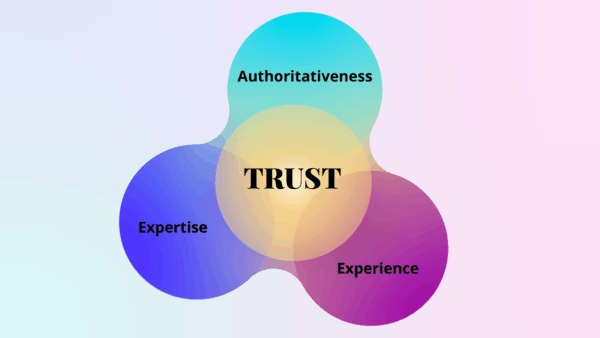
Therefore, businesses should clearly communicate who created their content, why they are qualified to discuss the subject, and how their information is supported.
For example, content authored by experienced professionals, industry experts, or recognized practitioners often carries greater authority than anonymous or generic material.
Similarly, organizations should ensure that factual claims are accurate, up-to-date, and supported by credible evidence whenever possible.
Trust has become particularly important in an era where misinformation can spread rapidly. Consequently, websites that establish strong reputations for accuracy and reliability are more likely to earn visibility within generative search experiences.
Over time, authority compounds. As organizations consistently publish high-quality information, they strengthen their reputation across both traditional and AI-powered search environments.
Understanding User Intent More Deeply Than Ever
One of the most significant implications of generative AI search is the increased importance of user intent.
Historically, SEO often focused on identifying keywords and optimizing pages around those terms. While keywords remain valuable, AI systems now excel at understanding the underlying intent behind queries.
For instance, two users may search for similar phrases while seeking entirely different outcomes. One person may want educational information, while another may be comparing products or looking to make a purchase.
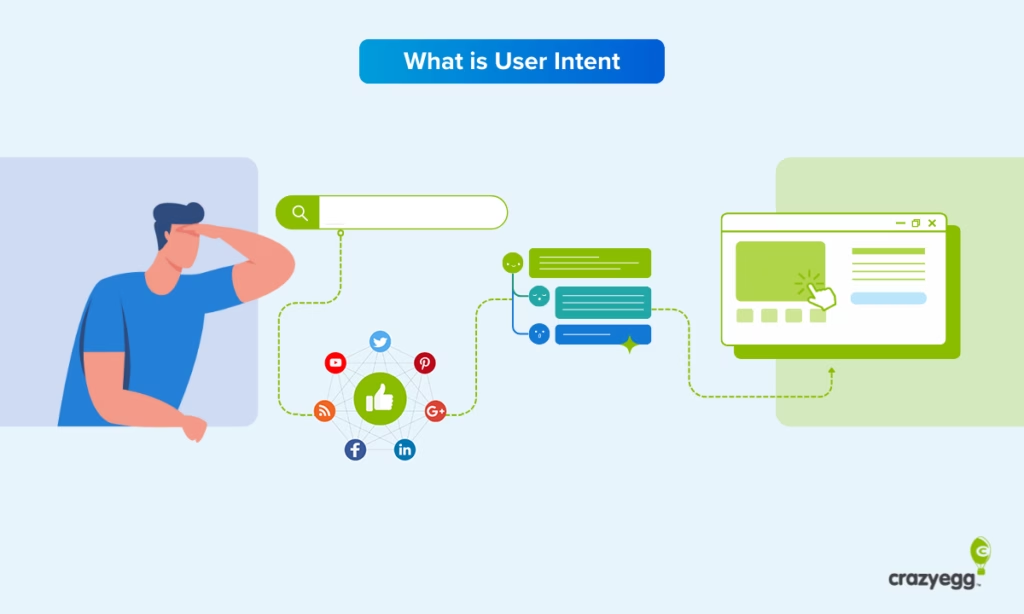
Generative AI systems attempt to understand these nuances and provide responses tailored to specific needs.
Consequently, content creators must move beyond keyword targeting and develop a deeper understanding of audience intent.
This means anticipating follow-up questions, addressing related concerns, and providing comprehensive context that helps users achieve their goals.
When content aligns closely with user intent, it becomes more useful. As a result, it is more likely to be selected as a trusted source for AI-generated responses.
Building Comprehensive Topic Authority
Google’s guidance also reinforces the value of topical authority.
Generative search systems often prefer sources that demonstrate broad expertise within a subject area rather than websites that publish isolated articles on unrelated topics.
Therefore, organizations should focus on developing comprehensive content ecosystems around their core areas of expertise.

Instead of creating disconnected content pieces, businesses should build interconnected resources that collectively address an entire topic.
For example, a healthcare organization should not only publish articles about medical treatments. It should also provide educational guides, patient resources, preventive care information, expert insights, and related supporting content.
This comprehensive approach helps search systems understand the depth of the organization’s expertise.
Moreover, topical authority improves user experience because visitors can find multiple related resources within a single trusted environment.
As generative AI continues to evolve, organizations with strong topical authority are likely to enjoy greater visibility and trust.
Optimizing Content Structure for AI Understanding
Content structure plays a critical role in helping generative AI systems interpret information accurately.
Although AI models are highly sophisticated, they still benefit from clear organization and logical information flow.
Google recommends creating content that is easy to navigate and understand. This includes using descriptive headings, clear sections, concise explanations, and logical progression between ideas.
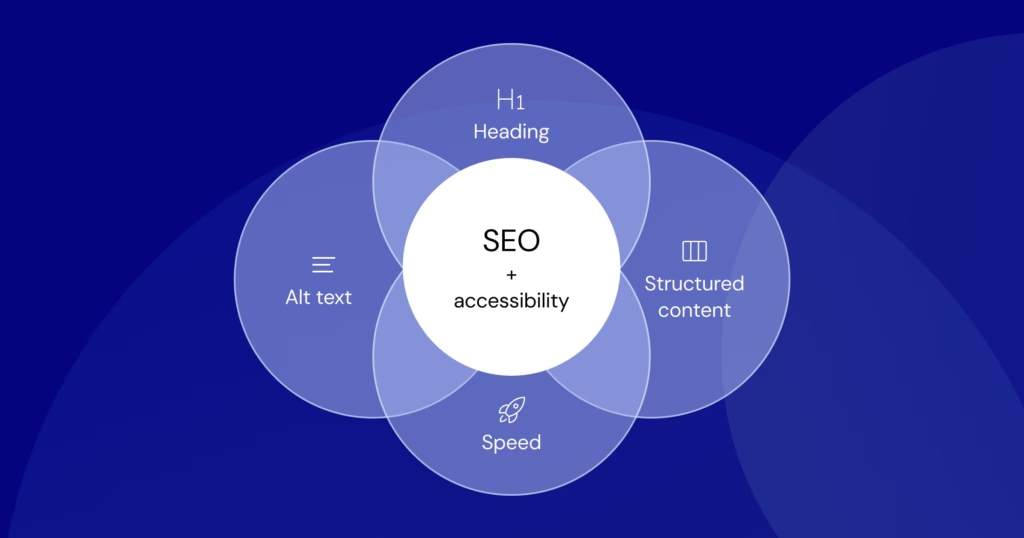
Well-structured content allows AI systems to identify key concepts more effectively.
Additionally, clear organization improves readability for human visitors. Therefore, optimizing content structure serves both users and search systems simultaneously.
This alignment represents a recurring theme throughout Google’s guidance. The practices that improve AI visibility often improve user experience as well.
Technical SEO Still Matters
Some marketers mistakenly believe that generative AI search eliminates the need for technical SEO.
However, Google’s guidance makes it clear that technical fundamentals remain important.
Search systems must still crawl, index, and understand website content before it can be included in AI-generated answers.

Therefore, organizations should continue focusing on site performance, mobile usability, structured data implementation, internal linking, and accessibility.
Fast-loading pages improve user satisfaction and facilitate efficient crawling.
Structured data helps search systems understand content context and relationships.
Strong internal linking supports topical authority and information discovery.
Accessibility improvements ensure content reaches broader audiences while enhancing overall usability.
Consequently, technical SEO remains an essential component of generative search optimization.
The Growing Importance of Original Insights
One area where generative AI search creates new opportunities is the value of original insights.
As AI systems become increasingly capable of summarizing common information, generic content becomes less differentiated.
Therefore, businesses that contribute unique perspectives, proprietary data, original research, expert commentary, or firsthand experience gain a significant advantage.

Original insights provide value that cannot easily be replicated elsewhere.
Moreover, AI systems often seek diverse viewpoints and authoritative sources when generating responses.
Organizations that invest in producing original content are therefore better positioned to earn visibility within AI-generated search experiences.
This trend highlights a broader shift toward quality over quantity.
Rather than publishing large volumes of repetitive content, businesses should prioritize creating information that genuinely contributes to the conversation.
Measuring Success in the Era of Generative Search
As search evolves, measurement strategies must evolve as well.
Traditionally, SEO success was often evaluated primarily through rankings and organic traffic.
While these metrics remain valuable, they no longer tell the complete story.

Generative AI search introduces new visibility opportunities that may not always result in immediate clicks.
Consequently, marketers should adopt a broader perspective when evaluating performance.
Brand visibility, authority growth, engagement quality, assisted conversions, and user trust all become increasingly important indicators of success.
Furthermore, organizations should monitor how their content appears within AI-generated experiences and identify patterns that contribute to inclusion.
By expanding measurement frameworks, businesses can gain a more accurate understanding of their search performance.
Preparing for the Future of Search
Google’s guidance ultimately points toward a future where the distinction between traditional SEO and AI optimization becomes increasingly blurred.
Rather than requiring entirely new tactics, generative AI search rewards organizations that embrace foundational best practices more effectively.
High-quality content, strong expertise, topical authority, excellent user experience, technical excellence, and genuine value creation remain the cornerstones of visibility.
However, the stakes are higher because AI systems evaluate information more comprehensively than ever before.
Consequently, businesses that invest in long-term quality are likely to outperform those seeking shortcuts.
The transition to generative search should not be viewed as a threat. Instead, it represents an opportunity for organizations willing to prioritize expertise, authenticity, and user value.
Conclusion
Google’s guide to optimizing for generative AI search provides an important roadmap for businesses navigating the next evolution of search.
Although the technology behind search is changing rapidly, the underlying principles remain remarkably consistent. Content that helps users, demonstrates expertise, solves problems, and provides trustworthy information continues to be rewarded.

At the same time, generative AI introduces new opportunities for organizations that build comprehensive topical authority, create original insights, and structure information clearly for both users and machines.
As we move further into 2026, successful SEO strategies will increasingly combine traditional optimization practices with a deeper understanding of how AI systems evaluate and synthesize information.
Ultimately, the organizations that thrive in generative search will not be those that attempt to game algorithms. Instead, they will be those that consistently create valuable, credible, and user-focused content that deserves to be discovered, referenced, and trusted.
