
The world of e-commerce is undergoing one of the most significant transformations since the introduction of online shopping. For years, online retailers focused primarily on optimizing their websites for traditional search engines by targeting keywords, building backlinks, improving page speed, and publishing high-quality content. Those strategies remain valuable today. However, a new layer of search has emerged, and it is rapidly changing how consumers discover products, compare brands, and make purchasing decisions.
Large Language Models (LLMs) such as those powering AI search assistants have fundamentally changed the customer journey. Instead of typing short keyword phrases into search engines and browsing through pages of results, consumers are increasingly asking detailed, conversational questions. They expect intelligent systems to recommend products, summarize reviews, compare features, explain technical specifications, and even suggest alternatives based on their individual needs.

Consequently, e-commerce businesses are no longer optimizing solely for traditional search engine results pages. They are now optimizing for AI-generated answers, conversational search experiences, and recommendation engines that rely heavily on Large Language Models. This new discipline is commonly referred to as AI SEO or Generative Engine Optimization (GEO), and it represents the next major evolution of search marketing.
For online retailers, this shift presents both enormous opportunities and significant challenges. Businesses that adapt early will increase their visibility across AI-powered search experiences, while those that continue relying exclusively on traditional SEO techniques may gradually lose market share as consumer behavior evolves.
Fortunately, the core principles behind AI SEO are not entirely different from traditional optimization. Rather, they build upon established best practices while introducing new considerations around semantic understanding, entity recognition, structured information, topical authority, and content quality.
This comprehensive guide explains how Large Language Models evaluate e-commerce websites, why AI SEO matters more than ever in 2026, and how online stores can optimize every aspect of their digital presence to improve visibility within AI-powered search systems.
The Evolution of Search in the Age of Artificial Intelligence
To understand why AI SEO has become so important, it is helpful to appreciate how search itself has evolved.
For many years, search engines primarily matched keywords with indexed webpages. Although algorithms became increasingly sophisticated, users still interacted with a familiar interface consisting of search boxes and ranked lists of links.
Today, that experience is changing rapidly.
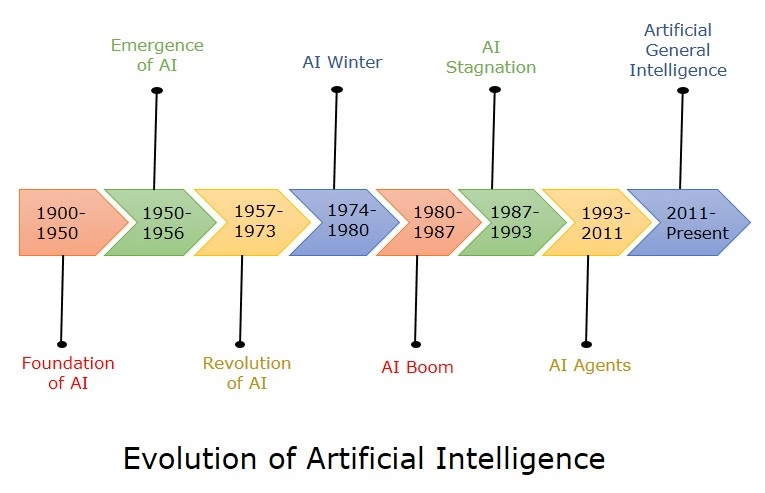
Artificial intelligence now enables search engines to understand natural language, interpret user intent, recognize relationships between concepts, and generate complete answers instead of simply displaying links.
Rather than asking, “best running shoes,” a customer may now ask, “What are the best waterproof running shoes for marathon training during rainy seasons that cost under $150?”
Instead of searching multiple websites individually, users receive summarized recommendations generated from information gathered across trusted sources.
This represents a profound shift for online retailers.
Visibility is no longer determined only by ranking on page one.
Instead, products, brands, reviews, buying guides, and category pages must also become understandable and trustworthy enough for AI systems to reference confidently.
Consequently, AI optimization is becoming an essential part of every successful e-commerce marketing strategy.
Understanding Large Language Models
Large Language Models are artificial intelligence systems trained on enormous amounts of text, enabling them to understand context, relationships, language patterns, and human conversation.
Unlike traditional keyword-based algorithms, LLMs interpret meaning rather than individual words.
For example, an LLM understands that “wireless headphones,” “Bluetooth earbuds,” and “cordless audio devices” may refer to closely related concepts even when different terminology is used.
Furthermore, these systems recognize intent.
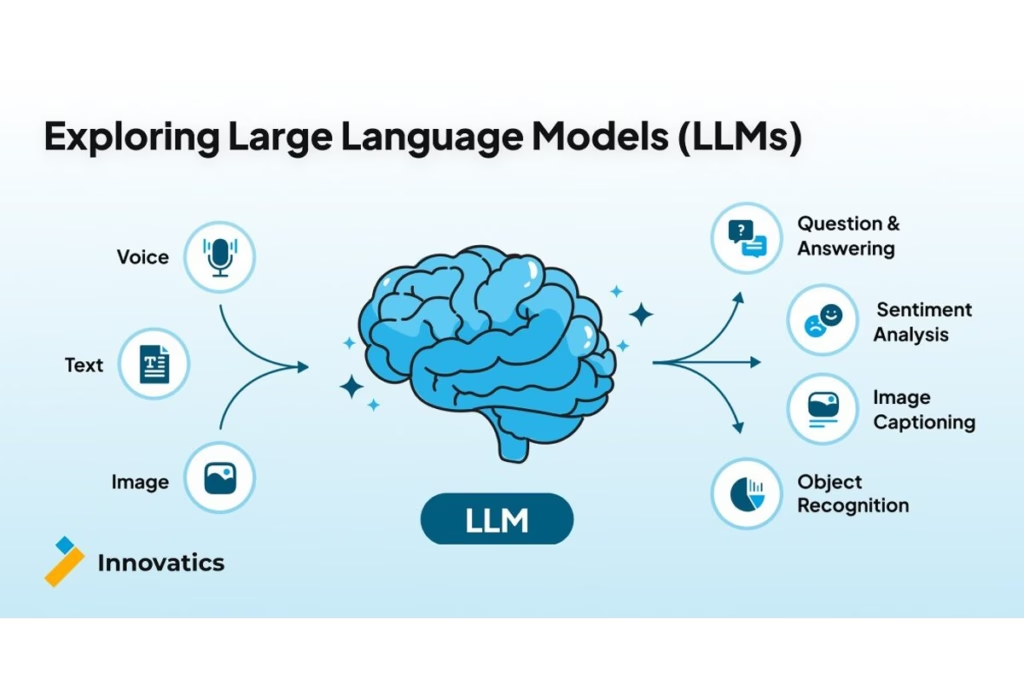
If someone asks for “the best laptop for architecture students,” the AI understands that the user values performance, graphics capability, portability, battery life, and software compatibility—even if those attributes are never explicitly mentioned.
This contextual understanding changes how e-commerce websites should structure their information.
Instead of creating dozens of nearly identical pages targeting slight keyword variations, businesses should focus on building comprehensive, authoritative resources that answer complete customer questions naturally.
Why AI SEO Matters for E-commerce Businesses
Many retailers wonder whether AI SEO is simply another marketing trend.
The evidence suggests otherwise.
Consumer search behavior is changing faster than ever before.
Millions of users now begin their shopping journeys with conversational AI instead of traditional search engines.
They ask for buying advice.
They request product comparisons.
They seek personalized recommendations.
They inquire about compatibility.
They ask follow-up questions.

This conversational purchasing process means that AI systems increasingly influence buying decisions before customers ever visit an online store.
Therefore, businesses that become trusted information sources gain significant advantages.
Visibility inside AI-generated responses creates brand awareness earlier in the customer journey.
Moreover, recommendations generated by trusted AI systems often carry substantial influence because users perceive them as objective and informative.
Consequently, optimizing for LLMs helps retailers reach customers at critical decision-making moments.
Traditional SEO Versus AI SEO
Traditional SEO remains essential.
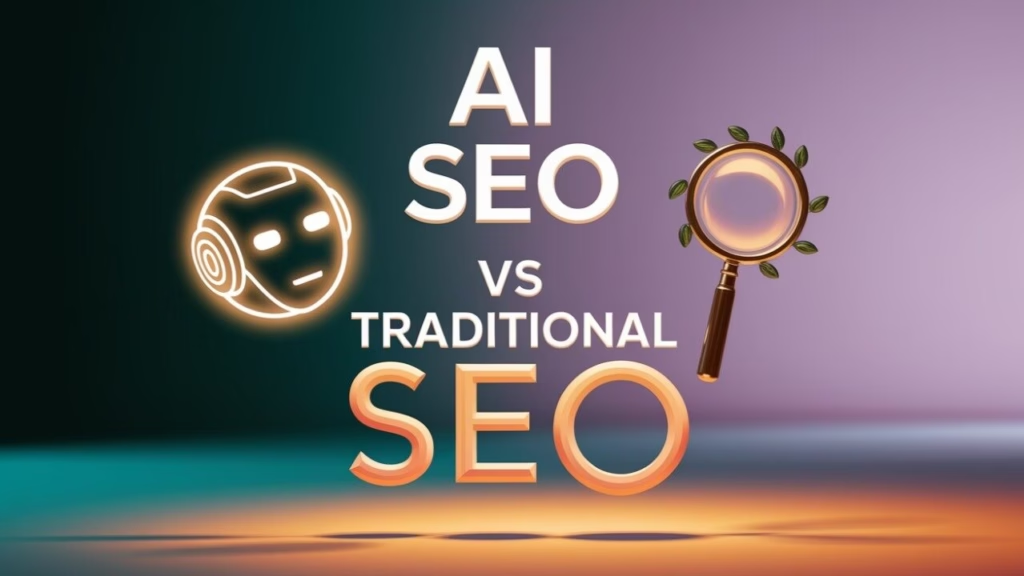
Technical optimization, fast loading speeds, structured websites, quality backlinks, and useful content continue to contribute significantly to search performance.
However, AI SEO extends these principles much further.
Traditional SEO often asks:
“Can search engines find this page?”
AI SEO asks:
“Can artificial intelligence fully understand this page?”
Traditional SEO emphasizes ranking.
AI SEO emphasizes comprehension.
Traditional SEO rewards relevance.
AI SEO rewards expertise.
Traditional SEO indexes pages.
AI SEO interprets knowledge.
This distinction is extremely important.
An online store may rank well organically while still providing insufficient context for AI systems to recommend its products confidently.
Therefore, modern optimization requires businesses to improve both discoverability and interpretability.
Building a Website That AI Can Understand
One of the biggest mistakes e-commerce businesses make is assuming that attractive design automatically leads to better visibility.
While visual design matters greatly for customers, AI systems primarily interpret information through structure and meaning.
Consequently, website architecture becomes increasingly important.
Every product page should clearly explain what the product is, who it serves, how it works, what problems it solves, and how it compares with alternatives.
Category pages should provide meaningful introductions instead of displaying products alone.
Buying guides should connect naturally with relevant product collections.
Frequently asked questions should answer genuine customer concerns rather than repeating keywords.
This interconnected information ecosystem helps AI recognize relationships throughout the website.
Over time, these relationships strengthen topical authority.
Creating Product Pages That Large Language Models Trust
Many online stores still publish extremely thin product descriptions copied directly from manufacturers.
Unfortunately, this approach creates two major problems.
First, duplicate content reduces differentiation.
Second, generic descriptions rarely answer customer questions comprehensively.
Modern product pages should read like complete educational resources.
Instead of merely listing specifications, explain why each feature matters.
Describe practical use cases.
Discuss common purchasing concerns.
Clarify compatibility information.
Address maintenance requirements.
Provide realistic expectations.
Help customers make informed decisions.
When product pages educate rather than simply advertise, they become significantly more valuable to both users and AI systems.
Large Language Models prioritize information-rich resources because they support better answer generation.
The Growing Importance of Semantic SEO
Semantic SEO has become one of the foundations of AI optimization.
Rather than repeating identical keywords excessively, semantic optimization focuses on covering an entire topic naturally.
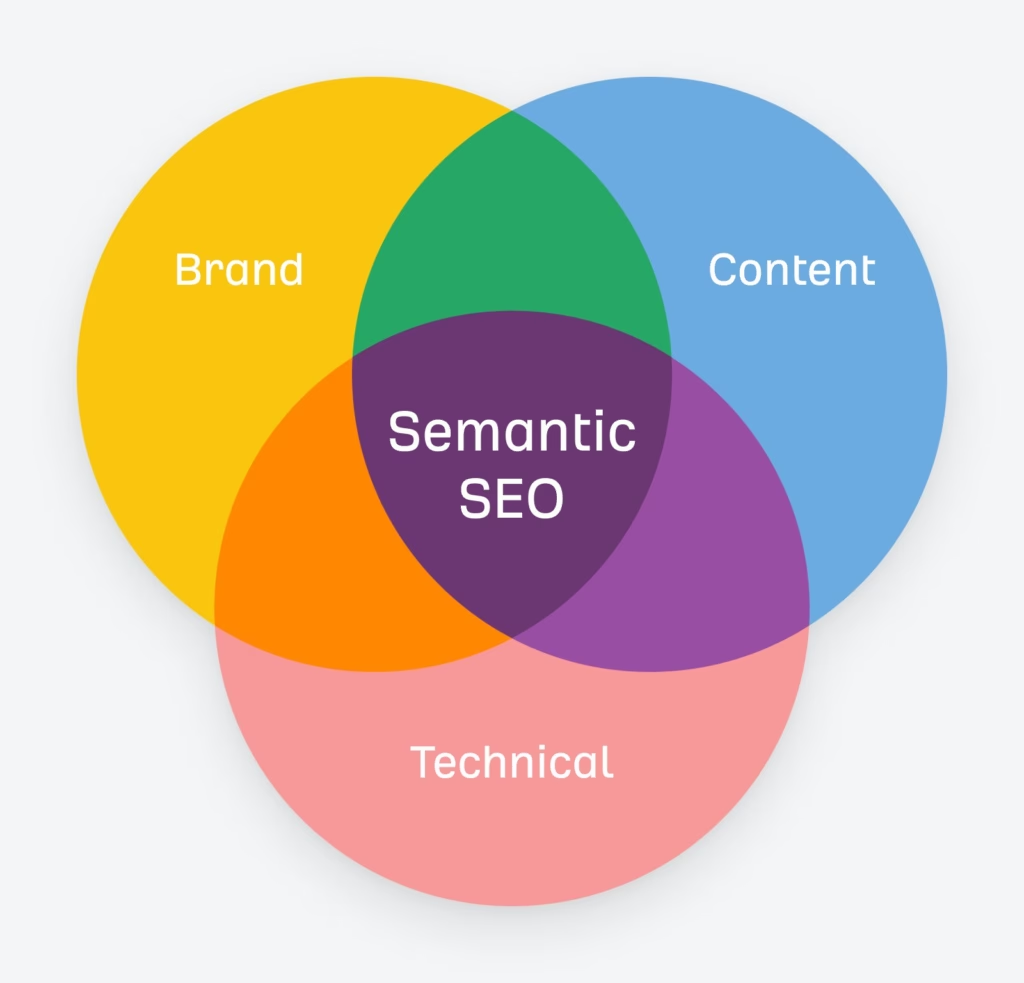
For example, a page selling ergonomic office chairs should naturally discuss posture, lumbar support, adjustable seating, remote work, home offices, productivity, comfort, spinal alignment, materials, durability, and workspace design.
These related concepts create semantic richness.
Consequently, AI systems gain deeper confidence in understanding what the page actually represents.
Furthermore, semantic optimization allows businesses to rank for hundreds of related search variations instead of optimizing narrowly for a single keyword.
This broader topical coverage aligns perfectly with how Large Language Models process information.
Why Topical Authority Has Become Essential
Search engines increasingly evaluate entire websites rather than isolated pages.
Similarly, LLMs assess whether a business demonstrates consistent expertise across a subject area.
For an e-commerce retailer, this means becoming more than simply a seller.
Successful online stores also become educators.

A skincare retailer should publish articles explaining ingredients, skin conditions, routines, seasonal care, product selection, and dermatologist recommendations.
An electronics retailer should explain technology trends, compatibility guides, troubleshooting advice, maintenance procedures, and purchasing considerations.
These educational resources establish authority beyond product catalogs.
Consequently, AI systems become more likely to reference these websites as trustworthy information sources.
This trust extends naturally into product recommendations.
Content Clusters Strengthen AI Understanding
Rather than publishing unrelated blog posts randomly, businesses should organize information into interconnected content clusters.
Each cluster focuses on one major topic.
Supporting articles explore related questions in greater detail.
Internal links connect every resource logically.
Over time, this structure demonstrates comprehensive expertise.
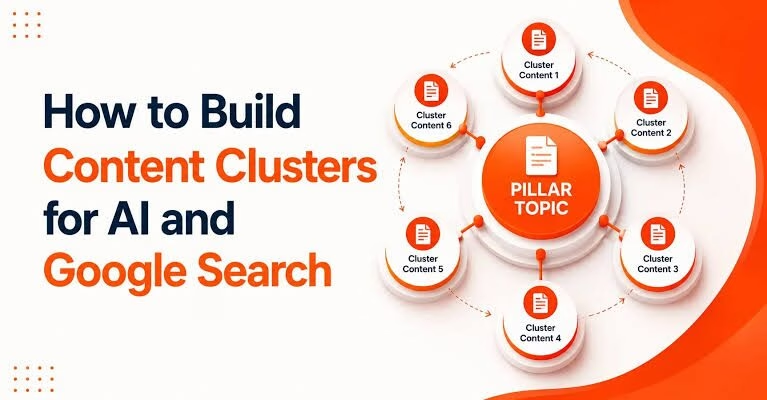
For example, an outdoor equipment retailer may build an entire knowledge center around hiking.
Within that cluster, readers might find guides discussing backpacks, hiking boots, navigation tools, weather preparation, camping gear, hydration, trail safety, and beginner recommendations.
Collectively, these resources establish topical authority that extends beyond individual pages.
Large Language Models recognize these relationships naturally.
Therefore, well-organized content clusters significantly improve AI visibility.
User Experience Remains a Powerful Ranking Signal
Although AI search emphasizes content quality, user experience remains equally important.
Search systems increasingly evaluate how users interact with websites after arriving.
If visitors leave immediately because pages load slowly, navigation feels confusing, or mobile usability is poor, these behavioral signals may negatively influence visibility.

Consequently, every optimization effort should prioritize customer satisfaction.
Fast loading speeds.
Clear navigation.
Readable typography.
Logical layouts.
Mobile responsiveness.
Accessible design.
Secure browsing.
Smooth checkout experiences.
All these factors contribute to stronger engagement.
Moreover, satisfied users generate positive reviews, return visits, and brand mentions, all of which reinforce authority across search ecosystems.
Using Structured Data to Help AI Understand Your Store
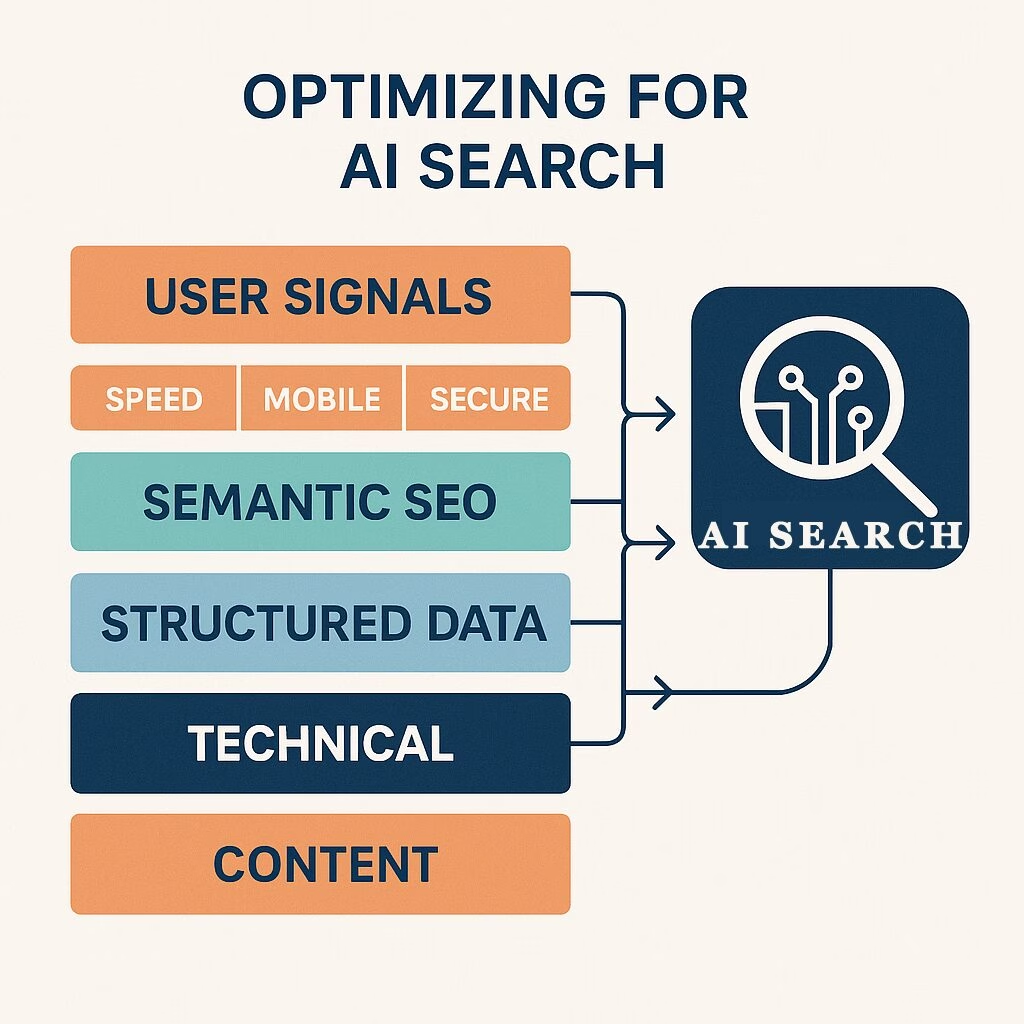
As Large Language Models become increasingly sophisticated, the importance of structured data continues to grow. While AI systems are capable of interpreting natural language exceptionally well, they still benefit from explicit signals that define what different elements on a webpage represent. Consequently, structured data acts as a bridge between human-readable content and machine-readable information.

For e-commerce websites, structured data provides context that helps search engines and AI systems understand products, prices, availability, reviews, shipping information, product variations, brands, and numerous other details. Rather than forcing an AI model to infer whether a number represents a price or a product rating, structured data communicates that information directly and accurately.
Furthermore, implementing structured data improves consistency across search experiences. Product information becomes easier for AI-powered search engines to retrieve, compare, and present within generated answers. This increased clarity also reduces ambiguity, which is particularly important when multiple products share similar names or specifications.
Although structured data alone will not guarantee visibility in AI-generated search responses, it significantly enhances an online store’s ability to communicate information effectively. Therefore, businesses that invest in accurate schema implementation position themselves for better discoverability across both traditional and AI-powered search ecosystems.
Creating Product Descriptions That Educate Instead of Selling
One of the biggest shifts introduced by AI SEO is the changing role of product descriptions. Traditionally, many retailers viewed product descriptions as promotional copy designed primarily to persuade customers to make a purchase. While persuasive writing remains valuable, AI systems reward content that educates just as much as it sells.
Therefore, modern product descriptions should answer the questions customers are likely to ask before they even ask them.

Instead of simply stating that a laptop includes sixteen gigabytes of memory, explain how that amount of memory benefits graphic designers, programmers, students, or business professionals. Rather than mentioning that a jacket is waterproof, describe the conditions in which the material performs best and how it compares to alternative fabrics.
These explanations transform ordinary product pages into valuable educational resources.
Moreover, AI systems frequently summarize information when responding to conversational queries. Rich, explanatory content gives these systems more reliable information to reference.
Consequently, businesses that write comprehensive product descriptions are far more likely to become trusted information sources.
Optimizing Category Pages for Conversational Search
Many online stores invest heavily in product pages while neglecting category pages. However, category pages often represent the first interaction customers have with a product collection.
In traditional SEO, category pages primarily targeted broad commercial keywords.
In AI SEO, their role expands considerably.

Category introductions should explain the differences between product types, help customers understand purchasing considerations, and guide users toward appropriate options based on their needs.
For example, a category featuring gaming monitors should discuss refresh rates, screen resolution, response times, panel technologies, compatibility, and recommended use cases.
Doing so provides valuable context that benefits both shoppers and AI systems.
Additionally, comprehensive category pages strengthen topical authority because they connect multiple related products under a unified subject.
This contextual relationship helps Large Language Models better understand an online store’s expertise within specific product categories.
Customer Reviews Have Become AI Training Signals
Customer reviews have always influenced purchasing decisions.
However, in the era of AI-powered search, they serve an even greater purpose.
Reviews provide authentic language that reflects real customer experiences.

They introduce practical vocabulary that businesses may never include in official product descriptions.
They highlight strengths, weaknesses, common use cases, and unexpected benefits.
Consequently, reviews contribute valuable semantic information that helps AI systems understand products more comprehensively.
Furthermore, detailed reviews often answer questions prospective customers have not yet considered.
This naturally improves topical depth.
Businesses should therefore encourage customers to leave thoughtful, detailed reviews rather than simple star ratings.
Meaningful reviews create richer content ecosystems while strengthening overall trust.
Building E-E-A-T for AI Search Visibility
One concept continues to dominate Google’s quality guidance: Experience, Expertise, Authoritativeness, and Trustworthiness, commonly abbreviated as E-E-A-T.
These principles have become even more important as AI systems evaluate information quality.
Online retailers should demonstrate genuine expertise throughout their websites.
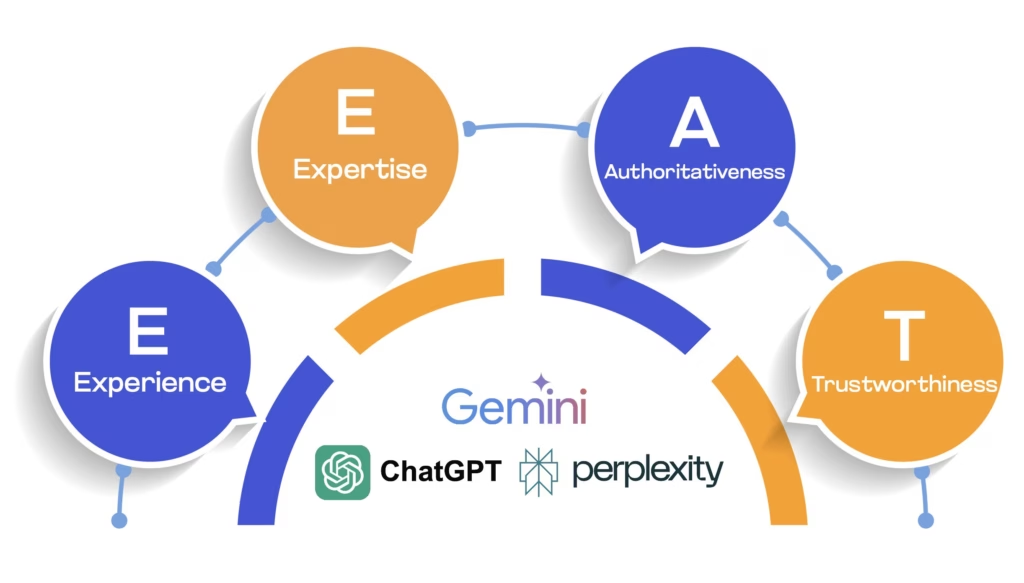
Educational articles should identify knowledgeable authors.
Buying guides should reference practical experience.
Company information should establish credibility.
Policies should communicate transparency.
Customer support information should be easily accessible.
Security measures should be clearly explained.
Every trust signal contributes to a stronger overall reputation.
Additionally, businesses should regularly update content to ensure accuracy.
Outdated information can reduce confidence, both among users and AI systems.
Over time, consistent demonstrations of expertise establish long-term authority that benefits every aspect of search visibility.
Internal Linking Creates Knowledge Networks
Internal linking has traditionally been viewed as an SEO tactic.
Today, it functions as something much more valuable.
It creates knowledge networks.
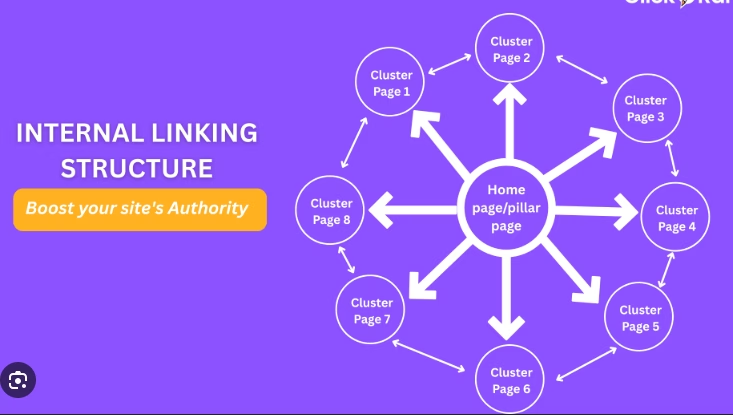
Large Language Models understand relationships between pages more effectively when websites establish logical connections throughout their content.
A buying guide discussing digital cameras should naturally connect to camera categories, lens collections, photography tutorials, maintenance advice, accessories, and relevant products.
Likewise, educational blog articles should reference supporting resources wherever appropriate.
These interconnected pathways strengthen semantic understanding while helping visitors explore related information.
Furthermore, strong internal linking distributes authority throughout the website, making important pages easier for search systems to discover and evaluate.
Rather than viewing internal links as navigation alone, businesses should treat them as educational pathways.
Optimizing Images for AI Search
Visual search continues to grow rapidly.
Consequently, image optimization plays an increasingly important role in AI SEO.
Every product image should include descriptive file names and meaningful alternative text that accurately describes the visual content.
Beyond accessibility benefits, these descriptions help AI systems interpret product imagery more effectively.
Additionally, providing multiple high-quality product images from different angles supports better visual understanding.
Lifestyle photography adds further context by showing products in realistic environments.
For example, furniture displayed within furnished rooms communicates scale and intended usage more effectively than isolated studio images.
Similarly, clothing shown on different body types provides a practical context that both customers and AI systems find valuable.
Using AI Analytics to Improve Optimization
One of the greatest advantages available to marketers in 2026 is the growing availability of AI-powered analytics.
Rather than relying solely on page views and rankings, businesses can now analyze conversational queries, customer journeys, engagement patterns, semantic coverage, and predictive performance trends.
These insights reveal not only which pages perform well but also why they succeed.
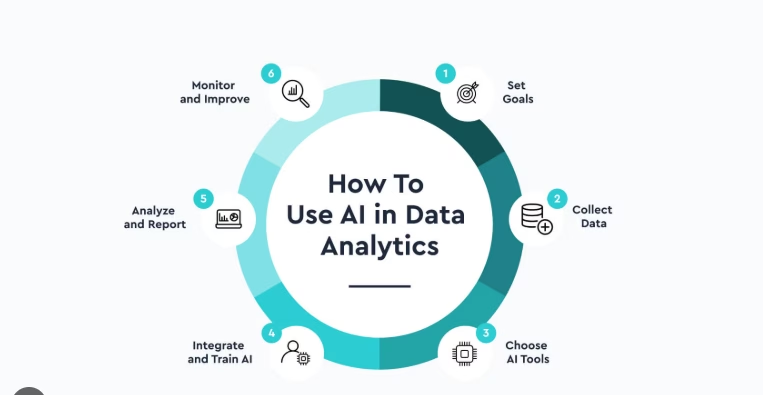
For instance, analytics platforms may identify recurring customer questions that existing content fails to answer adequately.
Addressing these information gaps improves both customer experience and AI visibility.
Similarly, predictive analytics can identify emerging search trends before competitors recognize them.
This proactive approach enables businesses to develop authoritative content early, establishing topical leadership before demand peaks.
Common Mistakes Businesses Make When Optimizing for LLMs
Although AI SEO presents exciting opportunities, many organizations continue making avoidable mistakes.
One common error involves publishing large volumes of AI-generated content without meaningful human oversight.
While generative AI dramatically improves productivity, content still requires expert review, fact-checking, and refinement.

Another mistake involves prioritizing keywords over genuine customer needs.
Large Language Models recognize when content exists solely for ranking purposes.
Shallow articles, repetitive product descriptions, and excessive optimization rarely perform well in AI-powered search.
Businesses also frequently underestimate the importance of technical quality.
Broken pages, slow loading speeds, inconsistent navigation, and poor mobile experiences reduce both user satisfaction and algorithmic confidence.
Finally, many organizations neglect ongoing optimization.
AI search evolves rapidly.
Consequently, websites require continuous improvement rather than one-time optimization projects.
Preparing for the Future of AI Commerce
Artificial intelligence will continue reshaping digital commerce throughout the coming years.
Future AI systems will likely provide increasingly personalized recommendations based on user preferences, purchasing history, behavioral patterns, contextual information, and real-time needs.
Voice commerce will continue expanding.

Visual search capabilities will become increasingly sophisticated.
Conversational shopping assistants will guide purchasing decisions more naturally than ever before.
Consequently, online retailers must begin preparing now.
Businesses that build comprehensive knowledge ecosystems, establish topical authority, maintain structured information, and prioritize customer education will adapt far more successfully than competitors focused solely on transactional selling.
The future belongs to organizations that become trusted advisors rather than simple product catalogs.
Measuring Success Beyond Rankings
Traditional SEO often emphasized keyword rankings as the primary measure of success.
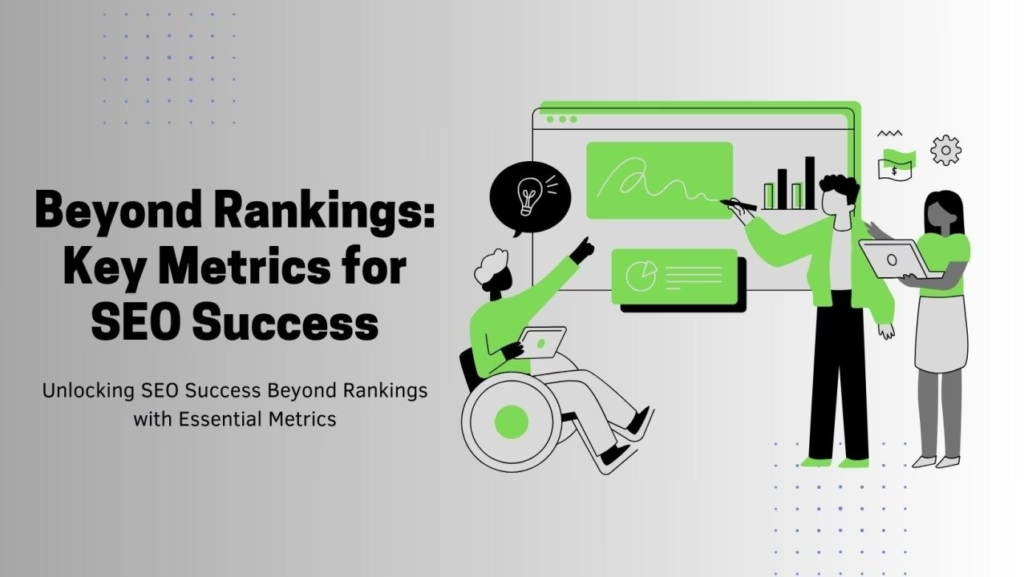
Although rankings remain important, AI SEO requires broader performance evaluation.
Brand mentions within AI-generated responses represent growing indicators of visibility.
Customer engagement quality becomes increasingly valuable.
Time spent consuming educational content demonstrates usefulness.
Returning visitors indicate trust.
Direct searches for brand names reflect growing authority.
Meanwhile, conversion rates reveal whether optimization efforts ultimately contribute to business growth.
Therefore, businesses should adopt comprehensive performance frameworks that evaluate customer relationships rather than isolated metrics.
The emergence of Large Language Models has fundamentally changed how consumers discover products, compare brands, and make purchasing decisions. While traditional SEO remains an essential part of digital marketing, it is no longer sufficient on its own. Modern e-commerce businesses must also optimize for AI-driven search experiences that prioritize understanding, trust, relevance, and expertise.
Fortunately, succeeding in AI SEO does not require abandoning established best practices. Instead, it requires expanding them. Businesses must move beyond simply targeting keywords and begin building comprehensive knowledge ecosystems that educate customers, answer real questions, and demonstrate genuine authority.
Every product page should provide meaningful value beyond basic specifications. Every category page should guide purchasing decisions. Every article should contribute to topical expertise. Every review should enrich customer understanding. Every technical improvement should enhance both usability and machine interpretation.
As AI-powered search continues to evolve throughout 2026 and beyond, the retailers that thrive will not necessarily be those with the largest advertising budgets or the biggest product catalogs. Rather, they will be the organizations that consistently publish trustworthy, informative, and customer-focused content while maintaining technically excellent websites that AI systems can understand with confidence.
Ultimately, AI SEO represents more than another optimization trend. It signals a broader shift toward a digital marketplace where knowledge, credibility, and customer experience determine visibility. Businesses that embrace this transformation today will be well-positioned to capture greater organic traffic, earn stronger AI recommendations, and build lasting relationships with customers in the intelligent search era.
